

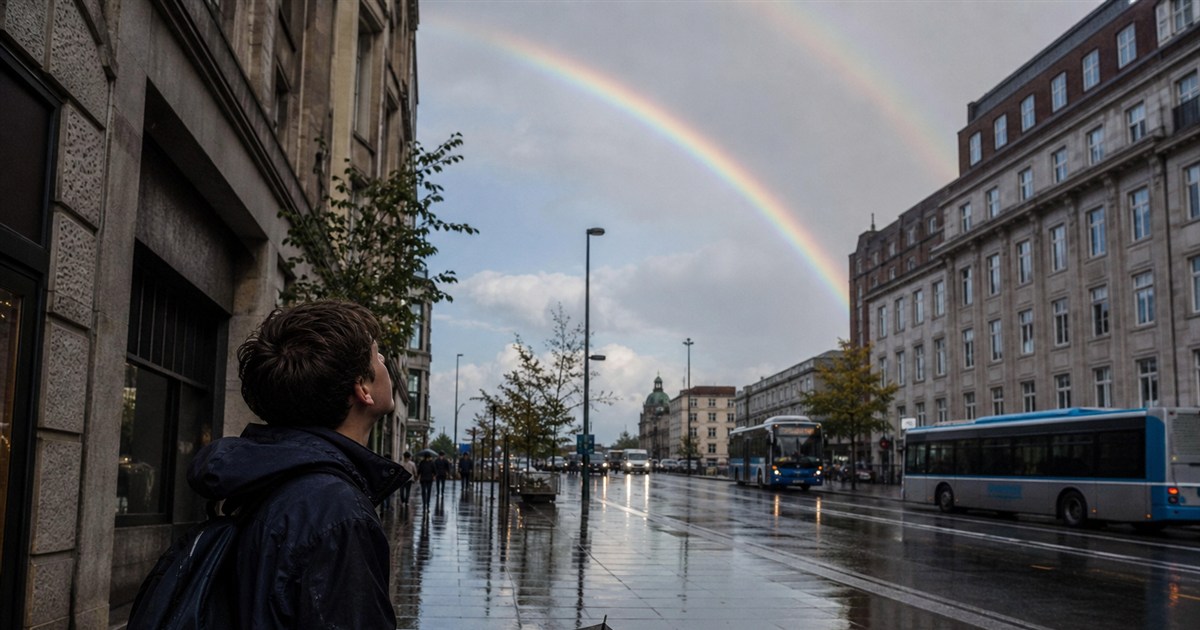
A familiar song at an unexpected moment, a rainbow after a difficult day or a feather that brings someone to mind can feel deeply meaningful. You can make room for that experience without asking it to decide your future.
For some people, such moments feel like guidance from spirit, angels or loved ones. For others, the meaning is personal or symbolic. You do not need to settle every question about the source before reflecting on what the moment brings up for you.
What do signs and omens mean?
A sign is an event someone reads as meaningful. The word omen is often used when the event is understood as pointing toward something ahead, though the terms overlap in everyday speech.
Different traditions have their own ways of interpreting signs. A personal association, a modern numerology meaning and a teaching within a religious tradition are not interchangeable. Notice which kind of interpretation you are using rather than assuming every symbol has one universal translation.
Keep the event and the interpretation separate
Begin with what you actually noticed. “A particular song played while I was thinking about my grandmother” is an account of an event. “My grandmother is telling me to move” adds an interpretation and a proposed action.
You may value the first connection without accepting every conclusion that follows. The song could invite remembrance, a conversation about family or a quiet moment of gratitude. It does not have to carry a detailed instruction.
Event: I noticed a rainbow on the walk home after a difficult conversation.
Association: It reminded me of hope and the possibility of beginning again.
Reflection: What would a calmer next conversation need?
Choice: I can consider the other person’s words and my own boundaries before deciding whether to speak again.
Six moments you might reflect on
These are open prompts, not fixed meanings or claims that every example comes from the same tradition.
A feather
Who or what came to mind? Did the moment offer comfort, curiosity or a memory? Our feather-and-angel guide explores personal meaning without chasing proof.
A repeating number
What question were you carrying when you noticed it? Explore a framework you value, such as the reflections in our 101 guide, without treating the sequence as a deadline or order.
A memorable dream
What did you feel, and what does the image mean to you? The dream-journal guide offers a flexible way to explore more than one interpretation.
A song or a phrase
Which part stood out? It may help you name a hope, a memory or something you want to say. The words do not reveal another person’s consent or private thoughts.
A rainbow or a striking view
What quality did the moment suggest: relief, beauty, gratitude or possibility? You can keep the meaning without turning it into a promised outcome.
An animal encounter
What associations did the animal bring up? Observe without disturbing it, and let practical safety and ordinary circumstances matter alongside symbolism.
A four-part reflection
- Notice without rushing. Describe the event and your immediate reaction. Mark uncertain details as uncertain.
- Explore the association. Ask what it means within your own memories, beliefs or chosen tradition. Leave room for more than one reading.
- Consider the context. What ordinary circumstances could explain the event? What have you recently been paying attention to? Spiritual meaning and an ordinary cause need not be treated as mutually exclusive.
- Choose, or let it rest. If an action comes to mind, check that it is sensible, proportionate and respectful of others. Doing nothing is a valid response.
A journal can help you keep the original account distinct from a later interpretation. Include details that did not fit, not only the ones that seemed striking. You are allowed to change your understanding.
If you have asked for guidance
You might bring a question into prayer or meditation and stay open to what you notice. Be aware that holding a question in mind may also change which events attract your attention.
If you do not notice a sign, you have not failed. You can gather information, seek appropriate advice or make a considered decision without waiting for a special event.
For a more focused spiritual question, try our spirit-guide journal prompts. Ask about what deserves your attention, rather than demanding a guaranteed yes or no.
Do not let an interpretation take over a decision
A meaningful moment can raise a question; it does not supply every fact you need. Check an offer’s written terms, speak directly about a relationship and use relevant qualified advice for decisions that require it.
An ordinary animal sighting, number or broken object is not reliable evidence that someone will die or that a disaster is coming. If you are worried about an actual health or safety issue, respond to the issue directly rather than trying to cancel an omen.
Be cautious if a reader claims a sign proves you are cursed and uses that fear to demand urgent or escalating payments. You can value spiritual guidance while declining an interpretation or a service.
Make room for meaning without constant checking
Noticing signs is not, by itself, a diagnosis. What matters is whether the practice remains a free and manageable part of your life.
If repeated checking becomes hard to control, disrupts sleep or prevents ordinary decisions, pause the search for more interpretations and speak with a qualified health professional. NIMH’s guidance on unwanted thoughts and repetitive behaviors explains why distress and interference deserve support; a spiritual ritual alone does not establish OCD.
A useful spiritual practice leaves room for relationships, responsibilities and uncertainty. You can treasure a moment, allow its meaning to remain open and keep your own choices involved.
Signs and omens: frequently asked questions
1. What is the difference between a sign and an omen?
A sign is an event someone understands as meaningful. An omen is often understood as pointing toward a future event, although everyday use varies. Neither label tells you how certain an interpretation should be.
2. Can a coincidence still be spiritually meaningful?
Yes, it may have meaning within your beliefs or personal life. You do not have to establish a supernatural cause before reflecting on it. Keep the meaning separate from claims you cannot verify.
3. How do I know what a sign means for me?
Record what happened, what you were thinking about and the associations it brought up. Consider more than one interpretation. A meaning can be worth reflecting on without becoming a certain answer.
4. Why do I notice a number more after reading about it?
Once a number is important to you, you may pay more attention to it and remember it more easily. Keep that possibility in view alongside your spiritual interpretation, and avoid treating every appearance as a new instruction.
5. Do repeating numbers have one universal meaning?
No single interpretation fits every person or tradition. You can explore a numerological framework you value, but distinguish that framework from a fact about what will happen in your life.
6. Can a feather feel like a sign from a loved one?
It may feel comforting or significant, especially if it brings someone to mind. You can honor that connection without proving contact or collecting the feather. Others may understand a similar moment differently.
7. What if I dream about a sign?
Write down the dream before deciding what it means. Explore the feeling, setting and your own associations. A dream image is not by itself reliable evidence about another person’s private thoughts or a future event.
8. Can I ask for a sign about a decision?
You can include that in a personal prayer or reflection if it fits your beliefs. Keep practical information, consequences and other people’s choices involved. Do not make a sign the only permission you have to decide.
9. What if no sign arrives?
You have not failed or been abandoned. You can wait, gather information or make an ordinary considered choice. Your spiritual life does not need to depend on receiving a particular event on demand.
10. Should I act immediately when something feels meaningful?
Usually there is room to pause and consider it. Ask whether the proposed action is proportionate and supported by information. Do not let urgency override safety, consent or an important practical check.
11. Does an animal sighting predict bad news?
An ordinary sighting is not reliable evidence that a death or other disaster is coming. You can explore personal or spiritual associations without treating the animal as a warning you must obey. Leave wildlife undisturbed.
12. What if an interpretation frightens me?
Step back from it and consider other possibilities. You do not have to accept a prediction because it was spoken confidently. Avoid anyone who uses the fear to pressure you into payments or unwanted actions.
13. Can two people understand the same sign differently?
Yes. Personal memories, beliefs and cultural context shape interpretation. Different readings do not require either person to surrender their own judgment or persuade the other.
14. Do I need to keep the object I noticed?
No. A note, a sketch or simply remembering the moment may be enough. Respect wildlife, other people’s property and any rules that apply where you are.
15. Can a reader help me interpret a sign?
A thoughtful reading may offer questions or perspectives you had not considered. You remain free to disagree. Be cautious with claims that a sign proves a curse or disaster that can only be removed through more payments.
16. Does noticing signs mean I have a mental-health condition?
No. A spiritual belief or meaningful coincidence is not, by itself, a diagnosis. If fear or repeated checking becomes hard to control and interferes with life, a qualified health professional can help assess what is happening.
17. When should I pause sign-seeking?
Pause if it repeatedly interrupts sleep, holds up ordinary decisions, takes excessive time or creates fear that you must perform a ritual to prevent harm. You can seek support without giving up every spiritual belief.
18. What is a useful everyday response to a sign?
Notice it, record the event separately from its interpretation and ask whether it suggests one thoughtful question. Choose an action only if it makes sense in your actual circumstances. Leaving the moment uninterpreted is also allowed.
I don’t agree with the idea that we’ve lost the skills of gaining knowledge firsthand. We’re constantly learning from various sources, including digital media.
This article resonates with me, I feel like I’ve lost touch with nature and that it’s time to reconnect.
I think interpreting events as spiritual signs or omens is simply a way for people to find meaning in random occurrences.
It’s essential to maintain a balance between rational thinking and openness to interpreting spiritual signs. Both perspectives have their value.
It’s true that nature communicates with us through signs and omens. It’s important to be open to receiving these messages.
The concept of spiritual signs and omens seems far-fetched to me. I believe in scientific explanations for phenomena.
Connecting with nature can indeed be a grounding experience. It’s important to remember the value of spending time outdoors.
I’ve experienced moments when signs seemed to guide me through tough decisions, but I’m not sure if they were truly meaningful or just coincidences.