

Quick answer
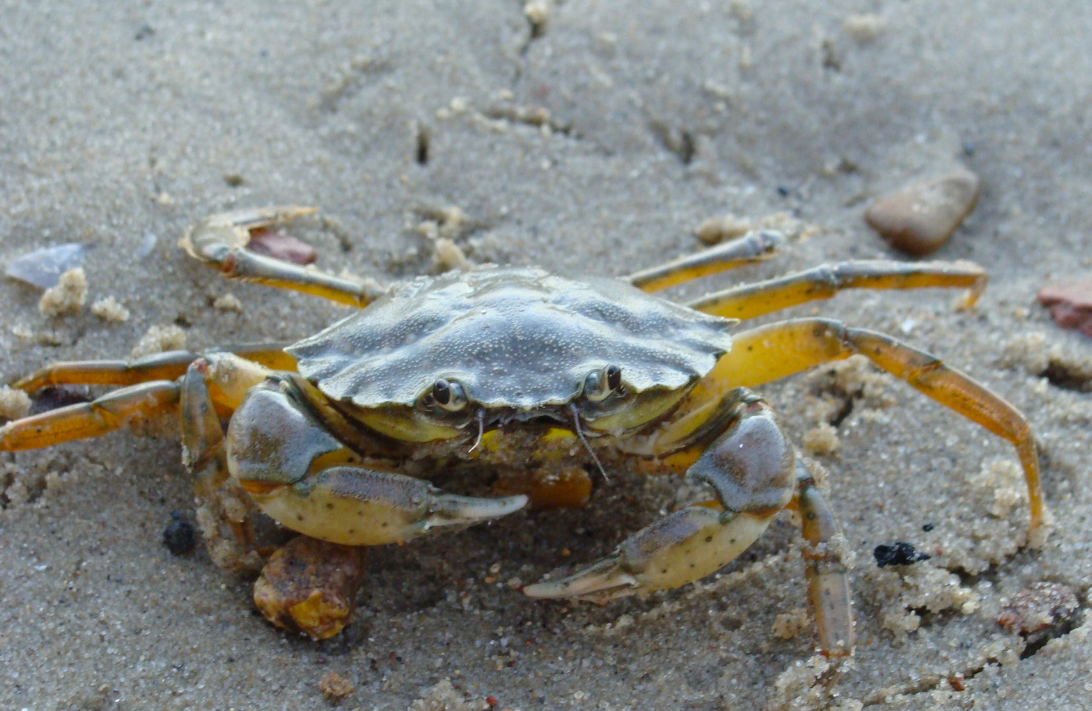
The crab’s most famous story is a small one. In Greek myth Hera sent the crab Karkinos to nip at Heracles while he fought the Hydra; it was crushed, and Hera set it in the sky as the constellation Cancer. Astrology later made Cancer the sign of home, protectiveness and changeable moods, which is an interpretive tradition rather than a fact about anyone born in July. The biology gives better material. A crab can only grow by moulting: it splits its old shell, backs out soft and hides for days until the new one hardens. That is a fair picture of any change that leaves you exposed for a while. Crabs walk sideways because their leg joints bend in one plane, not because they avoid problems. What a sighting reveals is where your attention went. The full sea creature guide is Sea Creature Encounters: Dolphins, Whales and Crabs, Their Folklore, the Biology Behind the Behaviour, and What They Can Mean.
Crab traditions and crab facts
| Tradition or fact | What it says | Note |
|---|---|---|
| Karkinos | Hera’s crab is crushed by Heracles and honoured with a constellation | Greek myth; the origin of the name Cancer |
| The zodiac sign Cancer | Home, protection, moods, the shell people hide in | An interpretive framework, not evidence about personality |
| Moulting | A crab sheds its shell to grow and is soft and vulnerable for several days | Soft-shell crab on a menu is a crab caught just after moulting |
| Walking sideways | Leg joints hinge in one plane, so sideways is the efficient direction | Some species, like spider crabs, walk forwards |
| Heikegani | Japanese crabs with a face-like shell are said to hold the spirits of drowned Heike samurai | Fishermen throw them back, which may have favoured the pattern |
| Fiddler crab waving | Males wave one giant claw to attract mates and warn rivals | Not a greeting to you, however it looks |
- Look before you touch, and lift a crab only briefly, from behind, with wet hands.
- Put every rock back the way you found it; the underside is somebody’s home.
- Leave animals in the pool; a bucket in the sun kills within an hour.
- Step on bare rock or sand, not on barnacles, mussels or seaweed.
- Check the tide tables and keep an eye on the water; pools refill fast.
What the old version got wrong: It treated “Native American” as one culture with one crab teaching and gave the crab a message about boundaries. Hundreds of nations have their own stories, and the message you felt was yours. The crab was looking for food and cover. For a bigger encounter, see what a whale sighting means.
Read the full sea creature guide
Dolphins, whales and crabs, their folklore, the biology behind the behaviour, and what an encounter on the shore can mean.
‘Crabs are fascinating’? Absolutely! But let’s be real—if they were any less fascinating, they’d just be delicious seafood on our plates! A little humor goes a long way in discussing such serious topics!
“Ah yes, the spiritual significance of seeing a crab! Next thing you know, we’ll be interpreting the meanings behind jellyfish stings and fish scales. This is getting hilariously absurd!”
While I appreciate the attempt to find meaning in everyday encounters, attributing such profound symbolism to crabs feels a bit forced. Are we really supposed to draw life lessons from a creature that scuttles sideways?
This article beautifully encapsulates the multifaceted symbolism of crabs across cultures. It’s enlightening to see how these creatures can guide our personal growth and resilience. A splendid reminder that nature holds deeper meanings!
“The crab’s cycle of renewal resonates with me profoundly as I navigate my own personal transformations. Nature indeed has an uncanny ability to mirror our inner experiences—this article captures that essence well.”
“Seeing crabs repeatedly might just mean my beach vacation is overdue! But on a serious note, the idea that they symbolize intuition struck me deeply; perhaps I need to listen more closely to my inner self.”
The exploration of crabs as symbols of protection and emotional depth is intriguing. I would have liked more empirical examples or studies linking these interpretations to psychological outcomes. Still, an engaging read!
I must disagree with the romanticized view presented here. The crab’s ‘resilience’ is merely a biological response to survival, not a philosophical lesson for humans. Let’s not anthropomorphize creatures based on mere whimsy.