

Quick guide
A dolphin riding the bow wave, a whale breaching half a mile off, a crab backing out of its own shell on a rock at low tide: these are encounters people remember for years, and almost every coastal culture has built stories on them. Greek sailors made the dolphin a rescuer and a companion of the gods; Maori tradition has whale ancestors and guardian creatures of the sea; nations of the Pacific Northwest coast carve the orca as a crest; Japanese fishing towns raised memorial stones to whales; the Norse sagas are full of them. None of those stories is a fact about the animal, and the animal did not come for you. The dolphin is saving energy and playing, the whale is signalling or shaking off parasites, the crab is growing. What an encounter can do is leave you feeling small in front of something large and alive, which is worth a great deal and needs no prophecy attached. This guide gives the folklore fairly, the biology behind the behaviour, a table of seven sea creatures, the distance rules that keep the animals safe, why encounters seem to arrive at meaningful moments, and what you can carry away from one. It also drops the old claims that dolphins guard swimmers from sharks or that swimming with them heals.
What cultures have made of dolphins and whales
The Greek poet Arion, in the story told by Herodotus, was thrown overboard by pirates and carried to shore by a dolphin; dolphins were sacred to Apollo, whose oracle at Delphi carries their name, and to Poseidon, and a dolphin on a coin or a tomb meant safe passage. In Maori tradition the ancestor Paikea reached Aotearoa on the back of a whale, and whales and dolphins appear as guardians and as kin; some tribes still greet a stranded whale as a relative. Nations of the Pacific Northwest coast, among them the Haida, Tlingit and Kwakwaka’wakw, carve the orca as a crest of particular lineages and tell of a people beneath the sea; those stories belong to those families and are described here only in outline. Japanese fishing villages honoured whales as gifts and raised memorial stones and held rites for the animals they took. The Norse sagas describe whales as weather signs, as food and as monsters, and the Book of Jonah gave the Western world its great fish. Modern readings of dolphins as healers and playmates grew out of aquarium shows and a 1960s television series, and are the newest layer of all.
The biology behind the behaviour
Most of what looks like a message has a mechanical or social explanation, and the explanation is usually more interesting. Dolphins ride the bow wave of a boat because the pressure wave pushes them along for free, in the way a surfer rides a swell; they did it with whales before there were boats, and they seem to enjoy it, but they are not escorting you. A dolphin that raises its head out of the water is spy-hopping to look around. Whales breach for several likely reasons: to signal across distance, since the splash carries further than a call in rough water, to dislodge parasites and loose skin, and in courtship displays; humpbacks and right whales do it most. A tail slap is often a warning or a call to the group. A spout is a breath, warm air condensing, and its shape tells watchers the species. Crabs grow only by moulting: the animal absorbs water, splits its old shell along the back, and backs out soft and vulnerable, then hides for days while the new shell hardens. That is the image people reach for when they speak of shedding a life, and it is accurate; the crab is in real danger until the shell sets. The companion articles on whale sightings and seeing a crab go into each animal in more detail.
| Creature | What cultures have made of it | Popular reading now | What it is doing |
|---|---|---|---|
| Dolphin | Rescuer and sacred animal in Greece; kin and guide in Maori tradition; messenger of the sea gods in India | Joy, play, a message to lighten up | Riding a pressure wave to save energy; hunting in a group; spy-hopping to look |
| Whale | Ancestor and guardian in Maori tradition; a gift honoured with rites in Japan; Jonah’s great fish | Depth, memory, the vastness of feeling | Breaching to signal or shed parasites; breathing; migrating to breed or feed |
| Orca | Lineage crest on the Pacific Northwest coast; a sea wolf in older European accounts | Family, power, protection | Hunting in a family pod led by an older female; teaching young to hunt |
| Crab | The zodiac sign Cancer; a hero’s foe in Greek myth; sideways cunning in folktales | Protection, moving sideways, shedding a shell | Feeding at the tide line; moulting to grow; hiding while the new shell hardens |
| Seal | Selkies who shed their skins in Scottish and Irish stories; the sea’s shepherd in Norse lore | Playfulness, a return to the water | Resting on rocks to warm up and digest; watching you with curiosity |
| Sea turtle | Carries the world in several traditions; long life in East Asia | Patience, homecoming | Returning to the beach where it hatched to nest; surfacing to breathe |
| Octopus | The kraken of Norse legend; a trickster in Hawaiian stories | Flexibility, hidden intelligence | Hunting at night; changing colour and texture; hiding in a den |
Watching without harming: the distance rules
The encounters people treasure most are the ones the animal chose, and that only happens if you give it room. In United States waters the Marine Mammal Protection Act makes it illegal to feed, chase or harass whales, dolphins and seals, and federal guidance sets minimum distances. Feeding wild dolphins teaches them to approach boats and propellers, and fed dolphins die younger. Swimming with wild dolphins disturbs their rest, which is why Hawaii now bans approaching spinner dolphins, and the claim that swimming with dolphins treats depression, autism or anything else has no supporting evidence and keeps captive animals in tanks. The old version of this article repeated that claim and the idea that dolphins protect swimmers from sharks; both are dropped. A whale-watching boat that slows, runs parallel and never cuts across a pod’s path will give you a longer look than one that chases.
| Situation | Rule | Why |
|---|---|---|
| Whales from a boat | Stay at least 100 yards (about 90 metres); never approach head-on | Avoids collisions and lets the whale keep its course |
| Dolphins and seals from a boat | At least 50 yards (about 45 metres); no chasing, no circling | Prevents separation of mothers and calves |
| Spinner dolphins in Hawaii | No approaching within 50 yards, by boat or swimming | They rest in bays by day and need the sleep |
| Seals hauled out on a beach | Keep dogs on leads and people well back | A disturbed pup may be abandoned |
| Feeding any marine mammal | Illegal in US waters | Fed animals lose fear of boats and are injured |
| Drones | Keep well above and away; many areas ban them near whales | Noise and shadow cause stress responses |
| Crabs and tide pools | Look, replace rocks as found, do not take animals home | The pool is a habitat, not a display |
| Stranded animal | Do not push it back; call the local stranding network | Refloating injures animals and people |
Why encounters arrive at meaningful moments, and what to do with one
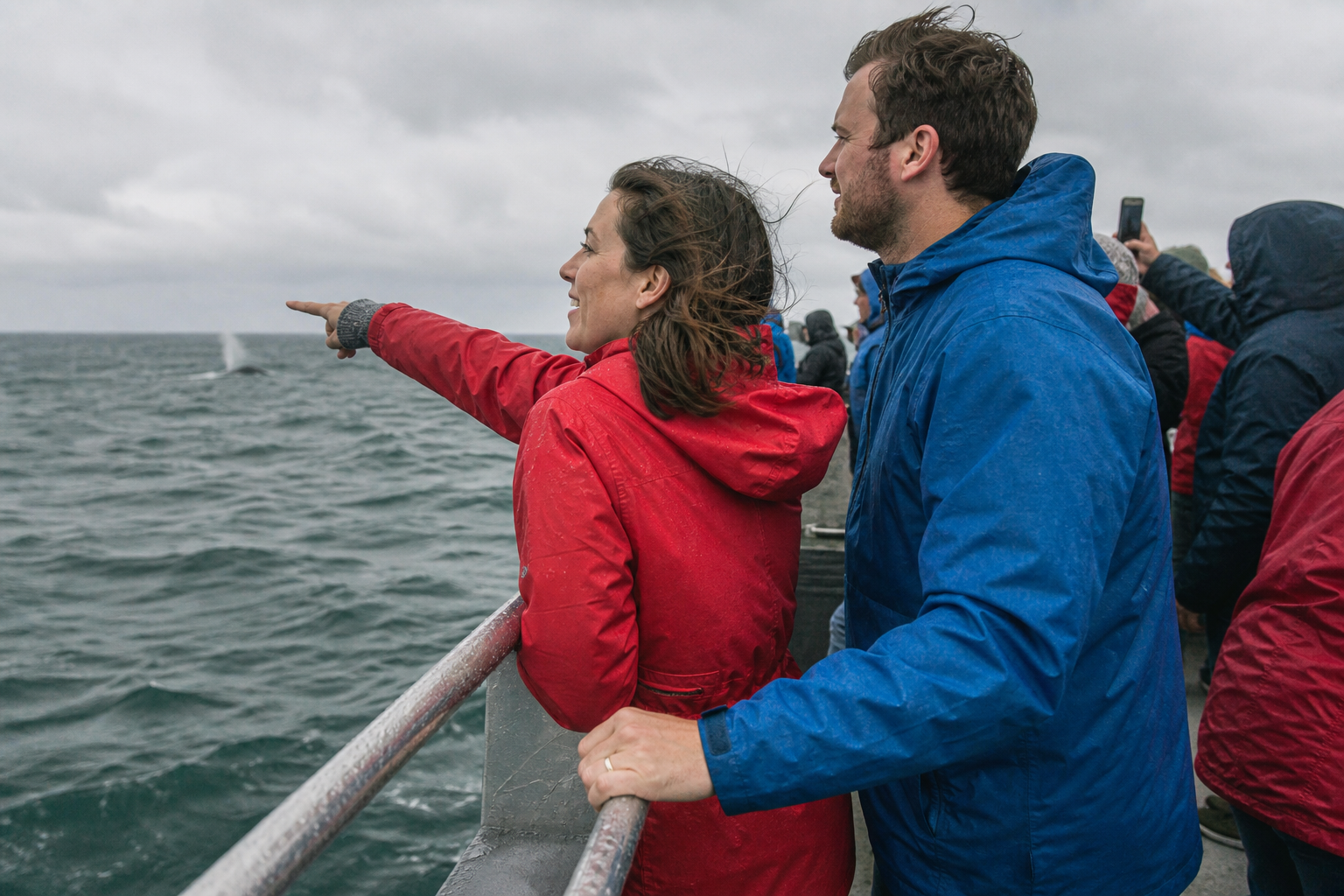
People often meet a whale in the month after a death or a divorce, and it feels like an answer. The plainer explanation is that trips to the coast are what people do after hard news, that whale-watching seasons are predictable, and that memory keeps the encounter that fitted and drops the ordinary afternoons, a habit psychologists call confirmation bias. The feeling is still real. Standing on a deck while something the size of a bus rises and breathes beside you produces awe, and awe is well documented to make people feel smaller, calmer and more generous for hours afterwards. That is what an encounter can fairly mean: not a message, but a reset. The four steps below keep the reset and lose the fortune-telling. The guide to signs and omens sets out the general principle, butterfly symbolism and bird sightings apply it to smaller creatures, and what is your spirit animal explains why an animal you choose as an emblem is a reminder rather than a messenger.
- 1. Watch the animalGive it the whole encounter as an animal: what it is doing, which way it is heading, who it is with.
- 2. Name what you were carryingWhat was on your mind before it surfaced? That is the content of the moment.
- 3. Choose a reading on purposeTake one line from the table if it helps, and say to yourself that you chose it.
- 4. Do one small thingSupport the stranding network, book the slower boat, write the letter; a prompt, not a forecast.
Key takeaways
- Dolphin and whale folklore is rich and specific to each culture; crest stories on the Pacific Northwest coast belong to particular families.
- Bow-riding saves energy, breaching signals or sheds parasites, and a crab moults to grow; each is a better story than a message.
- Keep 100 yards from whales and 50 from dolphins and seals, never feed them, and skip swim-with programmes and dolphin therapy claims.
- Encounters seem to arrive at meaningful moments because of when people go to the coast and what memory keeps.
- What an encounter can fairly give you is awe, which resets perspective for hours; take that, and leave the prophecy.
Related reading
- What Does a Whale Sighting Mean?
- What Does It Mean to See a Crab?
- Butterfly Symbolism Across Cultures
- Bird Sightings and What They Mean
- What Is Your Spirit Animal?
- What Are Signs and Omens?
Frequently asked questions
1. What does it mean to see a dolphin?
The dolphin is hunting, travelling with its group, or riding the pressure wave of your boat to save energy. Greek tradition made it a rescuer and a sacred animal, Maori tradition a guide and kin, and modern culture a symbol of joy. It did not come to find you. If the encounter stopped you, ask what you were thinking about when it did.
2. Why do dolphins swim next to boats?
They ride the bow wave, where the pressure pushes them forward for free, in the way a surfer rides a swell. Dolphins did this beside large whales long before boats existed. It appears to be enjoyable as well as efficient, and pods often take turns. It is not an escort, a warning or a greeting, and slowing down or turning toward them ends it.
3. Do dolphins protect swimmers from sharks?
There are a few reported cases of dolphins circling swimmers near sharks, and many more of dolphins ignoring people entirely. Dolphins and sharks share the same water every day without incident. The old version of this article presented protection as a known trait; it is an anecdote, and no one should rely on it.
4. Is swimming with dolphins good for your health?
There is no reliable evidence that it treats depression, autism, anxiety or anything else; the studies that claimed benefits were small and poorly controlled. Swim-with programmes keep dolphins in tanks or disturb wild pods that need rest. A boat trip at a respectful distance gives the awe without the harm.
5. What does it mean when a whale breaches?
A breach probably serves several purposes: signalling to other whales across distance, since the splash carries further than a call in rough seas, dislodging parasites and loose skin, and display during courtship. Humpbacks and right whales breach most. It is not directed at you, though it is one of the great sights of the natural world.
6. What did whales mean to Maori and other Pacific peoples?
In Maori tradition the ancestor Paikea arrived in Aotearoa on a whale’s back, and whales appear as guardians and as relatives; a stranded whale is still treated by some tribes as kin. Other Pacific peoples have their own whale ancestors and guardians. These are living traditions, and the outline here is a description, not an instruction for anyone else to follow.
7. What do orcas mean on the Pacific Northwest coast?
Among several nations, including the Haida, Tlingit and Kwakwaka’wakw, the orca is a crest belonging to particular lineages, with stories of a people beneath the sea. Those stories and designs are the property of those families, which is why this guide describes them only in outline and why copying crest art is not a fair way to honour an encounter.
8. What does a crab symbolise?
Protection and sideways movement, from its shell and its walk, and renewal, from its moult. In Greek myth a crab was sent against Heracles and became the constellation Cancer. Biologically the crab grows only by splitting its shell and backing out soft, then hiding until the new one hardens, which is the origin of the shedding-a-life image.
9. What does it mean if I find a crab shell on the beach?
Most whole crab shells on a beach are moults, not dead crabs: the animal split the old shell, climbed out and left it intact. Look for a slit along the back edge. A moult means a crab is growing nearby. It is a harmless and rather good thing to find, and a fair emblem for anyone in the middle of a change.
10. How close can I get to whales and dolphins?
In United States waters, keep at least 100 yards from whales and 50 yards from dolphins and seals, never approach head-on, and never feed them; feeding and harassment are illegal under the Marine Mammal Protection Act. In Hawaii it is illegal to approach spinner dolphins within 50 yards. Other countries have similar rules. A slow, parallel boat gets the longest look.
11. Is it legal to feed wild dolphins?
No, in United States waters, and feeding is discouraged almost everywhere. Fed dolphins learn to beg from boats, lose their fear of propellers and fishing gear, and die younger; calves that are fed never learn to hunt properly. If a dolphin approaches your boat, enjoy it, keep your hands in, and let it leave.
12. What should I do if I find a stranded whale, dolphin or seal?
Do not push it back into the water, pour water into its blowhole, or crowd it. Keep people and dogs back, note the location and the animal’s condition, and call the local marine mammal stranding network or coastguard. Trained responders can assess it; well-meaning refloating usually injures the animal and sometimes the helpers.
13. Why do I meet a whale or dolphin at the hardest times in my life?
Because people go to the coast after hard news, whale seasons are predictable, and memory keeps the encounter that fitted while forgetting the ordinary trips. Psychologists call the habit confirmation bias. The feeling of the encounter is still real: awe changes how people feel for hours. Take the awe; leave the idea that the animal knew.
14. Can a sea creature encounter be a message from someone who has died?
Many grieving people feel so, and the comfort is real. The whale was on its migration route on the days you were not there. If an encounter helps you remember someone, keep it as a ritual you chose, such as an annual trip to the same headland, rather than a signal you must wait for; that way it stays a comfort.
15. What does a seal watching me mean?
Seals are curious and rest on rocks to warm up and digest; a seal that watches you is deciding whether you are a threat. Scottish and Irish stories made them selkies, who shed their skins to walk on land, and the sadness in those tales comes from the animal’s almost-human eyes. Keep dogs leashed and stay well back from pups.
16. What does a sea turtle encounter mean?
A sea turtle at the surface is breathing; one on a beach is nesting where it hatched decades earlier, or has just emerged. Several traditions place the world on a turtle’s back and East Asia makes the turtle long life. Give nesting turtles darkness and distance, and report injured ones; every species is threatened.
17. What did the old version of this article get wrong?
It said dolphins carry souls between worlds, protect people from sharks, and that swimming with them has been shown to help people with health challenges. The first is a myth presented as fact, the second an anecdote, and the third has no reliable evidence and harms the animals. The awe of an encounter needs none of those claims to be worth having.
18. What can a sea creature encounter fairly mean for me?
A reset. Being close to something large and alive that is not interested in you produces awe, and awe reliably makes people feel smaller, calmer and more generous for hours afterwards. If you want to carry a meaning away, choose one on purpose: the crab’s moult for a change you are in, the pod for the people you rely on. Then do one small thing.
Evidence note: The folklore in this guide is presented as tradition, not fact; crest stories and designs on the Pacific Northwest coast and whale traditions in Aotearoa belong to specific peoples and are described only in outline. The behavioural explanations follow standard marine biology references. Distance and feeding rules follow United States federal guidance under the Marine Mammal Protection Act; rules differ elsewhere, and readers should check local guidance before a trip. Claims that dolphin swims treat any condition are not supported by reliable evidence.
😀 Just think about it—a dolphin could be your life coach! ‘Hey you, lighten up!’ Haha!
“Dolphins as messengers of joy”? So, if I see one, does that mean I should quit my job and join a circus?
This is just a bunch of fluff. Dolphins are animals, not mystical beings with spiritual messages.
While I appreciate the sentiment, we must remember that attributing human qualities to animals can lead us astray.
…but isn’t it fascinating how cultures have intertwined animal symbolism with human experiences?
What a beautifully written piece! Dolphins truly are magical creatures, and this article captures their essence perfectly.
I completely agree! The way dolphins symbolize joy and connection is so inspiring.
Absolutely! It makes me want to go out and seek a dolphin sighting myself!
Seeing a dolphin feels like a sign from the universe—definitely going to take this advice to heart!
Exactly! Let’s not forget their intelligence is impressive!
This article really made me rethink my connection with nature and how important it is for our well-being.
…but in reality, dolphins are just smart fish. They don’t hold the secrets of life; we do.
Or maybe they just want some snacks! Ever thought about that?
True, but the symbolism can help us reflect on our own lives.