

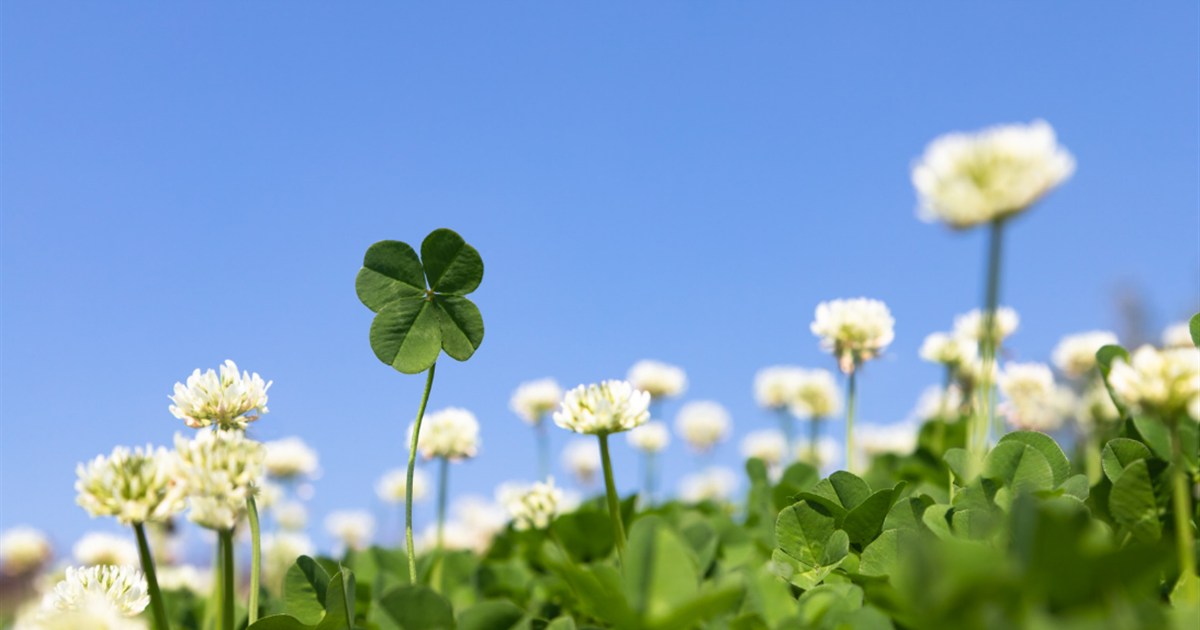
Finding a four-leaf clover can make an ordinary walk feel special. You may experience it as good luck, a blessing or a quiet encouragement to keep going. The pleasure of the discovery does not depend on proving that something extraordinary will happen next.
Notice what was on your mind when you found it. A hopeful interpretation can be a welcome companion to a difficult day, especially when it leads you toward something kind or constructive.
What makes a four-leaf clover unusual?
What we commonly call four “leaves” are four leaflets joined as one compound leaf. White clover usually has three. Look closely at the point where the leaflets meet so that overlapping leaves do not create the appearance of an extra one.
The University of Georgia’s explanation of four-leaf clovers describes a combination of genetics and environmental conditions behind the trait. Its occurrence is more complicated than a single universal set of odds. You can enjoy its rarity without needing an exact number to validate the find.
Hope, gratitude and a sense of being supported
Spiritually, you might take the clover as an invitation to notice what is still growing in your life. Perhaps there is support you have overlooked, a possibility you want to revisit or a small success that deserves acknowledgment.
A clover does not have to mean the same thing to everyone. If it feels like a personal blessing, let it bring encouragement rather than pressure to solve a hidden message.
Give the four leaflets a meaning of your own
You may encounter traditions assigning a quality to each leaflet. You can also choose your own four values and clearly understand them as a personal practice, rather than the one original meaning of the plant.
For example, you could choose hope, friendship, courage and care. Write each word beside a sketch of the clover, then circle the one you most want to practice this week. The value matters more than getting a symbolic formula “right.”
When you find one during a hard period
A small discovery can feel especially moving after disappointment or loss. You can welcome the comfort without deciding that hardship is over or that a particular wish has been guaranteed.
Ask: “What would a hopeful next step look like today?” It might be answering a message, taking a needed rest or returning to a plan with better information. For a wider approach to meaningful coincidences, read signs and omens.
Enjoy the search without turning it into a test
If you want to look for clovers, stay in places you may legally access, watch where you step and avoid damaging plants or taking material from protected areas. You can photograph a find and leave it growing.
Not finding one does not mean you are unlucky, blocked or less spiritually connected. A walk can still offer something worth noticing. Try the outdoor noticing practice if you would like to pay closer attention without demanding a particular sign.
A keepsake, not a condition for good things
If you keep a clover, let it remind you of the moment and the value you chose. Losing it, giving it away or seeing it fade is not evidence that good fortune has left you.
The lucky charms guide explores how to enjoy a meaningful object while keeping your choices your own. A lucky find can be a source of delight without becoming a rule for your future.
I’m curious about the connection between Lenormand tarot cards and clovers. It seems like there’s more to explore there.
I appreciate the different interpretations of finding a four-leaf clover. It’s interesting to think about how our own beliefs and experiences shape how we perceive luck.
Wow, this article really opened my eyes to the significance of finding a four-leaf clover! I’ll definitely be keeping an eye out for one in the future.
Sure, let’s play ‘who can find the lucky clover’ while I meditate and write down every detail about it
This article is fascinating! I never knew that clovers had such deep meaning in different cultures and religions. Very insightful.
The scientific explanation for why some clovers have four leaves is lacking here. It would be great to delve into this aspect with more detail.
I’m not entirely convinced about the spiritual significance of finding a four-leaf clover. Seems like a bit of a stretch to me.
The idea of wearing clover jewelry as a symbol of luck is intriguing. I might have to invest in some myself!