

Quick guide
A bird you notice is a real bird doing something ordinary: hunting, feeding, defending a territory, passing through on migration, or sheltering from weather. The meaning people attach to it, that an owl is wisdom or a warning, a cardinal a visit from someone who has died, a crow bad luck, a hawk a call to focus, comes from culture and from your own attention, and it varies so much from place to place that the same bird is a blessing in one country and a curse in the next. No bird predicts a death, a windfall or a letter. What a sighting can do is show you what is on your mind, because you notice the birds that match your mood and remember the ones that arrived on a meaningful day. This guide gives a table of ten common sightings with what cultures have made of each and why the bird is really there, a short account of why birds are seen when they are, the history of the owl as an omen and why it fails as a prediction, a four-step way to use a sighting without fooling yourself, and how to help the birds you are watching: windows, poisons, feeders, cats, and what United States law says about picking up feathers.
Birds as messengers, and what each one has meant
Birds were the first omens almost everywhere, for a reason that has nothing to do with the birds: they move between the ground and the sky, they appear and vanish, and their calls carry. Roman officials read the flight of birds before decisions of state; the Greek word for bird was also a word for omen; Norse stories gave Odin two ravens who flew out each day and returned with news; in China the magpie announces joy and in much of Europe a single magpie announces sorrow. The table gives ten sightings readers ask about most, what cultures have made of them, the reading that circulates online today, and what the bird is doing.
| Sighting | What cultures have made of it | Popular reading now | Why the bird is there |
|---|---|---|---|
| Owl | Athena’s wisdom in Greece; death omen in Rome; a witch’s form in parts of Africa and Mexico; sacred to some nations, feared by others | Wisdom, a warning, hidden truth | Hunting rodents at night; calling to hold a territory, loudest in late winter |
| Crow or raven | Odin’s messengers; creator in Pacific Northwest stories; battle bird in Irish myth; ill omen in medieval Europe | Bad luck, or a clever ancestor | Roosting, scavenging, mobbing a hawk; intelligent and social all year |
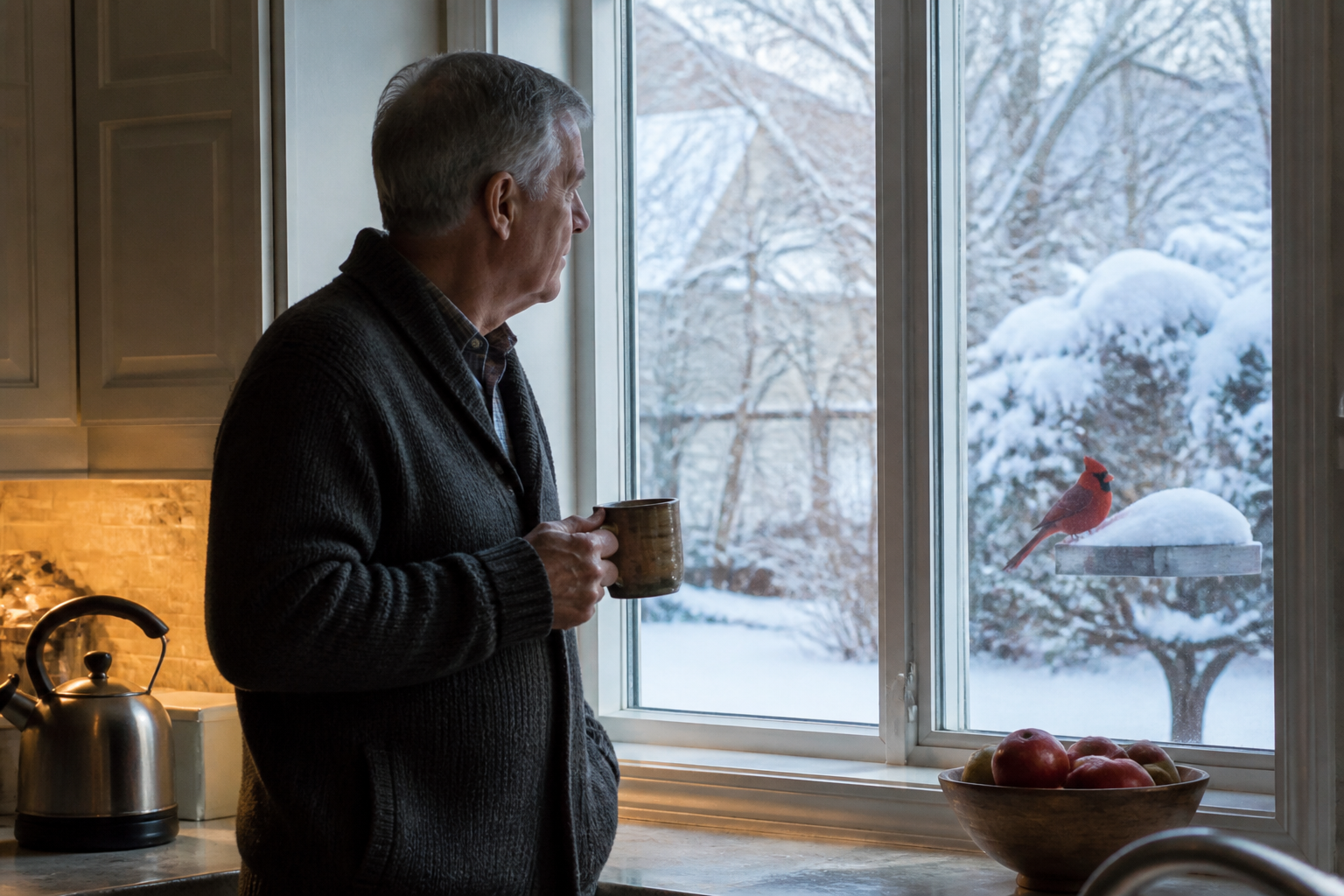
| Cardinal | No old folklore; the red-visitor idea appears in North America in the late twentieth century | A dead loved one saying hello | Resident all year; red males stand out most against snow |
| Hawk | Horus in Egypt; sacred in many Plains nations; nobility in medieval falconry | Focus, a message to rise above | Soaring on warm air; perching over open ground to hunt; migrating in autumn |
| Robin | Britain: winter, Christmas, the dead returning; North America: spring’s first sign | Renewal, a visit | American robins winter in flocks; the first lawn robin is a thaw sign |
| Seagull | Souls of drowned sailors; a storm warning in coastal lore | Freedom, a message to let go | Following fishing boats, landfill and picnics; inland after storms |
| Penguin | Almost none; a modern emblem of loyalty and family | Devotion, community | Only seen in zoos or the southern oceans; a media image, not a sighting |
| Peacock | Vehicle of Kartikeya in India; Juno’s bird in Rome; the eyes of the tail as vanity or the all-seeing | Beauty, confidence, being seen | Feral flocks in some suburbs; the display is for hens, loudest in spring |
| Bird in the house | Death omen across Europe; a visitor coming, in other regions | A message that cannot be ignored | A chimney, an open window, a reflection; it is frightened and wants out |
| A feather found | Angel or ancestor sign in modern belief; luck in older folklore | Someone watching over you | Moult, a predator’s kill, a preening bird; commonest in late summer |
Why you are seeing them now
Most sightings have a calendar and a map behind them. Owls call loudest from January to March, when great horned owls are already nesting; the Cornell Lab’s guide to the great horned owl describes a bird that begins courtship in the coldest weeks of the year, which is why so many people hear one during a hard winter and take it personally. Hawks pile up along ridges and coasts in September and October. Cardinals and robins seem to arrive in bad weather because snow makes a red bird visible and cold pushes birds to feeders. Crows gather in winter roosts of thousands. A feeder, a fruiting tree, a new pond or a neighbour who has stopped mowing will change which birds you see within a season. Then there is attention: the week after someone dies, or after you read that cardinals carry messages, you look at every red bird, and you had not looked before.
| When or where | Birds you are likely to notice | The ordinary reason |
|---|---|---|
| Late winter nights | Owls calling | Courtship and territory; great horned owls nest in February |
| First snow | Cardinals, robins, blue jays | Contrast against snow; cold drives birds to feeders and berries |
| September and October | Hawks, sometimes hundreds | Migration along ridges, lakeshores and coasts |
| Dusk in winter | Crows streaming one way | Flight to a communal roost, often in a town |
| Early spring lawns | American robins | Ground thawed enough for worms; flocks breaking up |
| Storm season, inland | Gulls in car parks | Blown in or following weather fronts; easy food |
| Late summer | Feathers on the ground | Annual moult; most birds replace all feathers after breeding |
| Any bright day | A bird at the window | It sees sky and trees reflected in the glass |
Why no bird predicts death, luck or money
The oldest surviving version of the owl omen is Roman. Pliny and other writers record owls appearing in the city before the deaths of prominent men, and later Europe kept the belief: an owl on the roof meant a death in the house. The pattern is easy to explain without the bird knowing anything. Owls were in the city every night; deaths of prominent men happened often enough; the two coincided regularly and were only recorded when they did. The nights an owl called and nobody died were not written down. This is how every animal omen works, and psychologists have a name for the habit of counting hits and forgetting misses: confirmation bias. The same mechanism lets a cardinal seem to arrive on an anniversary, since cardinals are there on most days and the anniversary is the day you looked. None of this makes the feeling wrong; a red bird on a hard morning can be a comfort, and comfort is worth having. It means the bird did not come for you, and it cannot tell you what is coming next. The general case is set out in what are signs and omens, and the guide to spirit animals covers why an animal you identify with is a reminder rather than a messenger.
An honest four-step way to use a sighting
A sighting is still worth something, because what you notice reveals what you are carrying. The method below keeps the benefit and drops the fortune-telling. It takes two minutes and works for a hawk over the motorway as well as an owl in the garden. The old version of this article told readers that seeing an owl meant they needed to be silent, adaptable and alone, and that owls could open the akashic records; none of that survives, but the moment of stopping to look does.
- 1. Look at the birdIdentify it, watch what it is doing, and let it be a bird for a full minute before it becomes a symbol.
- 2. Name what you were carryingWhat was on your mind when you looked up? That, not the bird, is the message.
- 3. Choose one meaning, if you want onePick the cultural reading that helps, and say to yourself that you chose it.
- 4. Do the small thingMake the call, take the walk, write the line; the sighting is a prompt, not a prediction.
- Any claim that a bird foretells a death, an illness, a pregnancy or money
- Counting sightings as proof after you have started looking for them
- Paying anyone to interpret a bird, a feather or a dream about either
- Chasing, feeding by hand or keeping a wild bird because it means something to you
How to help the birds you are watching
If a bird has caught your attention, the useful response is to make its life easier. Glass kills up to a billion birds a year in the United States, mostly at houses rather than skyscrapers, because a window reflects sky; the Cornell Lab explains why birds hit windows and how to prevent it, and the fix is a pattern of dots or tape on the outside of the glass no more than five centimetres apart. Owls and hawks are poisoned when they eat rodents that have taken second-generation anticoagulant baits, so use snap traps or a professional who avoids them. Keep cats indoors or in an enclosure. Clean feeders every two weeks and take them down during disease outbreaks. A bird trapped in the house needs the lights off and one exit opened wide; the companion article on a bird flying into your house gives the steps. And leave feathers where they lie. Under the Migratory Bird Treaty Act it is illegal in the United States to possess feathers, nests or eggs of most native birds, including a feather picked up on a walk, with exceptions for legally hunted game birds and for non-native species such as pigeons, starlings and house sparrows; the article on feathers and angels explains why that rule exists. Photograph the feather instead.
Key takeaways
- Birds became omens because they move between earth and sky; the same bird is a blessing in one culture and a warning in another.
- Most sightings have a season, a habitat or a feeder behind them, plus the fact that you have started looking.
- The owl omen is Roman and fails for the reason every omen fails: hits are recorded, misses are forgotten.
- Use a sighting to notice what you were carrying, choose a meaning on purpose, and do one small thing.
- Help the bird: mark windows, avoid rodent poisons, keep cats in, clean feeders, and photograph feathers rather than keeping them.
Related reading
- Seeing a Crow
- Seeing a Red Cardinal
- Seeing Hawks All Around You
- Seeing a Seagull in Life
- What Is Your Spirit Animal?
- What Are Signs and Omens?
Frequently asked questions
1. What does it mean when you see an owl?
An owl is hunting, or calling to hold a territory, which it does loudest from January to March. Cultures have made it wisdom in Greece, a death omen in Rome and later Europe, and a witch’s form in parts of Africa and Mexico. It predicts nothing. If it stopped you, ask what you were thinking about when it did.
2. Is seeing an owl bad luck?
No. The bad-luck reading comes from Rome, where owls in the city were noticed before prominent deaths and ignored on every other night. Owls are common, nights are many, and the coincidences were the only ones written down. An owl on your roof means there are mice in your garden.
3. What does a cardinal sighting mean?
In popular North American belief since the late twentieth century, a visit from someone who has died. There is no older folklore behind it. Cardinals stay all year and are simply most visible against snow and bare branches, which is also when people are indoors, grieving and looking out. Take the comfort; leave the prediction.
4. Are crows a bad omen?
In medieval Europe crows and ravens meant death because they fed on battlefields. In Norse myth they were Odin’s news-bringers, and on the Pacific Northwest coast Raven is a creator. Crows are intelligent, social birds that gather in winter roosts of thousands, mob hawks and remember human faces. Seeing them is normal wherever people live.
5. What does it mean when a hawk keeps appearing?
Hawks perch over open ground and soar on rising warm air, so they are visible above roads, fields and suburbs, and in September and October they migrate in large numbers. Many traditions make the hawk a symbol of vision or nobility. If you keep noticing them, you have started looking up, which is a good habit in itself.
6. What does a robin mean?
In Britain the robin is the bird of winter and Christmas, and a modern belief says it brings a message from the dead. In North America the robin is the first sign of spring, because flocks break up and birds return to lawns as the ground thaws. Both are seasonal facts turned into meaning.
7. What does it mean when a bird flies into your house?
Across Europe it was a death omen; elsewhere it meant a visitor. In reality the bird came down a chimney or through an open window and is now terrified. Turn off the lights, open one exit wide, close the others and leave the room. The companion article on birds in the house gives the full steps.
8. Why do birds keep hitting my window?
Glass reflects sky and trees, so the bird sees a way through. Collisions kill up to a billion birds a year in the United States, most at homes. Put dots, tape or decals on the outside of the glass, spaced no more than five centimetres apart, or hang cords in front of it. A single decal in the middle does nothing.
9. What does finding a feather mean?
Modern belief makes a found feather an angel or ancestor sign. Feathers are commonest in late summer, when birds moult and replace their plumage, and near a predator’s kill. In the United States it is illegal to keep feathers of most native birds under the Migratory Bird Treaty Act, so photograph it and leave it.
10. Is it really illegal to keep a feather in the United States?
Yes, for most native species. The Migratory Bird Treaty Act of 1918 prohibits possessing feathers, nests and eggs of protected birds, which includes almost all songbirds, hawks, owls and waterfowl, even feathers found on the ground. Exceptions cover legally hunted game birds and non-native species such as pigeons, starlings and house sparrows.
11. What do seagulls mean?
Coastal folklore made gulls the souls of drowned sailors and a storm warning when they came inland. Gulls follow food: fishing boats, landfill, picnics and car parks. Storms and strong winds push them inland, which is where the warning came from. The popular reading of freedom or letting go is a modern addition.
12. Can a bird sighting be a message from someone who has died?
Many grieving people feel that it is, and the feeling is real and often comforting. The bird itself is a bird, and it was there on the days you did not look. If a sighting helps you remember someone, keep it as a ritual you chose rather than a signal you received; that way it stays a comfort and does not become a test.
13. Why do I see the same bird everywhere after reading about it?
Because you have started looking, and because memory keeps the sightings that fit and drops the rest. Psychologists call this confirmation bias. It is normal and not a sign of anything except attention. Keep a plain count for two weeks, including the days with no sighting, and the pattern usually flattens out.
14. What does a peacock sighting mean?
In India the peacock is the mount of the god Kartikeya and a national bird; in Rome it belonged to Juno; the eyes on the tail have stood for vanity and for watchfulness. Feral peacocks live in some suburbs and call loudly in spring, when the display is for hens. Seeing one means a neighbour keeps them.
15. Should I feed the birds I am watching?
Feeders are fine if kept clean: wash them every two weeks, take them down during reported disease outbreaks, and place them either very close to windows or more than three metres away to reduce collisions. Never hand-feed wild birds or offer bread. Native plants and a shallow water dish help more than seed.
16. Are rodent poisons dangerous to owls and hawks?
Yes. Second-generation anticoagulant baits stay in a poisoned mouse, and an owl or hawk that eats several can bleed to death. If you have rodents, use snap traps in covered boxes, seal entry points and ask any pest company to avoid these baits. An owl in the garden is the best rodent control there is.
17. What did the old version of this article get wrong?
It said seeing an owl could never be negative, that owls carry messages from loved ones, that they can open the akashic records, and that Celts and Native Americans hold a single view of them. Traditions differ, the akashic records are a modern theosophical idea rather than a fact, and an owl’s message is that it is hungry.
18. How can I identify the bird I saw?
Note size, shape, colour, what it was doing and the time of day, then use a free identification app or a regional field guide. Owls are best told apart by call. Naming the bird changes the sighting from a symbol to an animal you now know something about, which is a better kind of connection and lasts longer.
Evidence note: Bird folklore in this guide is drawn from classical, medieval and modern sources and presented as tradition, not fact; no bird predicts events, and repeated sightings reflect season, habitat and attention. Natural-history details follow the Cornell Lab of Ornithology, including window-collision figures and the prevention method. The Migratory Bird Treaty Act summary is general; state rules and permits vary, and readers with a legal question should check with the US Fish and Wildlife Service.
The idea of an owl as a spirit animal is intriguing. I wonder what mine would be?
What an inspiring and insightful article! I never knew that owls could have such deep spiritual meanings. This really makes me want to pay more attention to the nature around me!
It’s interesting how different cultures attribute various meanings to the same animal. The owl truly seems to hold a special place in human mythology.
Absolutely! It just goes to show how diverse human perspectives can be when interpreting the world around us.
I love reading about animals that have spiritual significance across various cultures. This was a great read, thanks for sharing!
I’ve always loved owls, but I never knew they were so fascinating and significant in so many different cultures. This was a very informative read.
Hilarious! Now every time I see an owl, I’ll wonder if it’s trying to tell me something from the afterlife or my akashic records! Thanks for the laugh!
I’m sorry, but this is just a bunch of hocus pocus. Owls are simply animals. Assigning spiritual meanings to them is pure superstition and pseudoscience.
Actually, many cultures have revered owls as symbols of wisdom and truth for centuries. It’s not all superstition.
I can see where you’re coming from, but the symbolic meaning of owls has been deeply ingrained in human culture for ages.
This article is so far-fetched! Owls are just birds, not mystical messengers from another world. It’s ridiculous to read so much into it.