
Opening your third eye can be an invitation to listen inwardly with more patience and clarity. You do not have to chase visions, create pressure in your forehead or purchase an activation to explore that invitation.
In the familiar seven-center chakra map, the third eye is associated with Ajna and the brow area. Many spiritual practitioners connect it with intuition, insight and discernment. If you are new to the map, begin with the third eye chakra and the wider chakra meditation guide.
Set an intention, not a performance target
Ask what you hope a practice will bring to your life. “I want to hear myself more clearly before agreeing to things” is a useful intention. “I must see a light tonight or I have failed” makes an ordinary moment of reflection into a test.
You may believe that intuition has a spiritual source. You can honor that belief while remaining curious about what an impression means and checking practical facts before acting. Discernment includes the freedom to say, “I do not know yet.”
Eight gentle ways to explore inner awareness
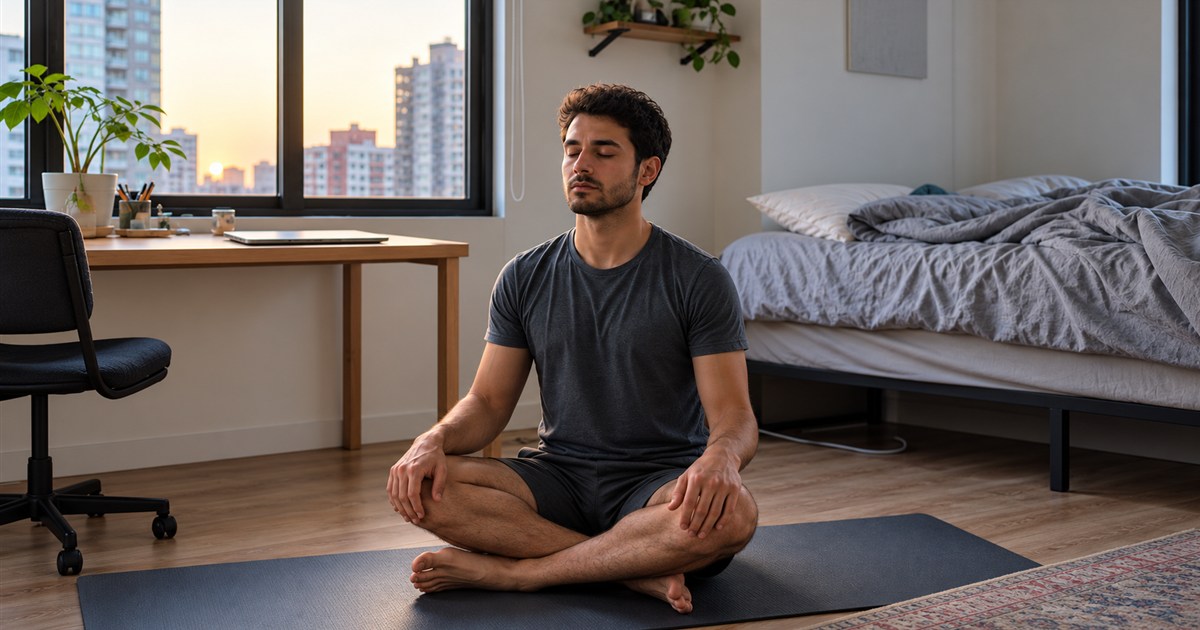
- Choose a comfortable place. Sit with support or use another position that suits your body. Put away anything that demands a response. Your surroundings need not look like anyone else’s meditation room.
- Let your breathing be ordinary. Notice a few unforced breaths. There is no need to hold the breath, extend an exhalation or produce a special sensation.
- Use a light point of focus. If brow awareness feels comfortable, rest attention there without squinting or pressing. Otherwise choose a quiet sound, your feet or an object in normal light.
- Make room for silence. When a thought appears, notice it without demanding an answer. Return gently to your focus. Distraction is not evidence that a chakra is broken.
- Write before interpreting. Record a dream, image or intuitive impression in your own words. On a separate line, note what you think it might mean. See using dreams for personal growth.
- Check impressions with care. Before an outcome, note what you expect and how uncertain it is. Later record what happened, including misses. Do not turn a feeling about another person into a fact about their private thoughts.
- Notice without searching for signs. Spend a little time with a tree, the sky or the sounds around you. Let the experience be complete without requiring a message.
- Bring one insight into daily life. Make a small, reversible choice: ask a clearer question, keep a boundary or complete something you have avoided. Let practice support your life rather than replace it.
Keep the spiritual map separate from medical claims
Ajna is not a medical diagnosis. The physical pineal gland and a subtle-body chakra are not interchangeable concepts, and a “decalcification” product is not a demonstrated route to psychic sight. You do not need a restrictive diet, detox or supplement to use the gentle practices above.
Colors, dreams and sensations can feel significant, but they are not a universal progress scale. Do not press on your eyes, stare at the sun or use bright lights to produce effects. Headaches and visual changes deserve attention in their own right. The National Eye Institute advises urgent care for sudden new floaters, flashes or a curtain-like shadow in vision.
Choose a pace and a guide that respect you
Begin with a short period you can end comfortably. There is no required duration, awakening deadline or obligation to increase intensity. The NCCIH meditation overview notes that some people experience negative effects; stop if a practice increases distress rather than pushing through.
If you work with a teacher or reader, ask what will happen, what it costs and how to pause or adapt it. An ethical guide leaves your choices with you. Guaranteed powers, fear-based claims and pressure to buy repeated clearings deserve a firm boundary.
For a broader, everyday approach, explore nine ways to strengthen intuition. For interpreting experiences without a symptom checklist, read signs people associate with the third eye.
Frequently asked questions
1. What does opening the third eye mean?
In spiritual practice it usually means developing inner awareness, intuition and discernment. People understand the experience differently; it is not a physical eyelid opening or a test everyone must pass.
2. Where is the third eye chakra?
In the familiar seven-center chakra map, Ajna is associated with the brow area. It is part of a subtle-body tradition rather than a structure an eye examination can identify.
3. Do I have to concentrate between my eyebrows?
No. You can use a sound, the feeling of your feet or an ordinary object instead. Brow focus should never involve straining your eyes, pressing your forehead or holding tension.
4. How long should a beginner practice?
Choose a brief period you can end comfortably, even a minute or two. There is no required daily duration or deadline for a spiritual experience; increase only if the practice continues to suit you.
5. Should I breathe in a special way?
For this gentle practice, let breathing remain natural. Do not force a count, hold your breath or breathe rapidly to create sensations.
6. Do I need to see colors or a star?
No. Some people use colors or symbols in visualization; others do not picture anything. A particular image is not a universal certificate that your third eye has opened.
7. Are headaches proof of progress?
No. Do not use pain as a measure of spiritual development. Stop a practice that brings discomfort and seek appropriate care for new, severe, persistent or concerning symptoms.
8. What if I notice flashes or new floaters?
Sudden new floaters, flashes or a dark curtain across vision need urgent eye care. Do not postpone an eye assessment while trying to interpret the experience spiritually.
9. Can I keep a dream journal?
Yes, if it feels helpful and does not cost you sleep. Record the dream first, then your interpretation, and leave room for several possible meanings.
10. How can I explore intuitive impressions?
Write down the impression before checking an outcome. Include uncertainty, what could count against it and later misses as well as matches. Reflection should make choices more thoughtful, not unquestionable.
11. Can a crystal help my practice?
You may use a crystal as a personally meaningful focus or ritual object. It is optional; no purchase is needed to begin, and a stone should not be treated as a medical treatment or guaranteed activator.
12. Should I fast or take a decalcification product?
No detox, restrictive diet or supplement is required for the practice described here. Claims that a product opens psychic sight are not a reason to change healthcare or nutrition advice.
13. Is the pineal gland the same as Ajna?
They belong to different kinds of explanation. The pineal gland is a physical gland; Ajna belongs to a spiritual map. Treating a gland as a chakra does not establish a medical method for opening intuition.
14. Do I need a teacher?
A teacher is optional for these gentle exercises. If you choose one, ask about their training, adaptations, fees and how they respond when a student wants to stop.
15. What is a concerning promise from a teacher?
Be cautious about guaranteed powers, secret diagnoses, escalating fees, pressure to abandon care, or claims that only one person can remove your blockage. A teacher should respect your freedom to disagree.
16. What if meditation makes me uneasy?
Stop, look around your surroundings and return to an ordinary activity. Persistent distress or difficulty functioning deserves support; you do not have to push through to prove commitment.
17. Can I practice with my eyes open?
Yes. Rest your gaze comfortably on an ordinary object in normal light. Never stare at the sun, a bright light or a flame to chase visual effects.
18. What is a useful sign that the practice fits me?
Look for how you live afterward: more patience, clearer boundaries or a thoughtful response to a difficult choice. Those are more useful to reflect on than collecting dramatic sensations.
“Open your third eye”—great! Next, will someone tell me how to unlock my fourth fridge? Because clearly, I need more food while contemplating cosmic mysteries! 😂
While I get that some people find value in these practices, can we really say that opening the third eye is universally beneficial? Isn’t it subjective? Not everyone believes in chakras or spirituality—let’s acknowledge that! 🤔
“Eat cleaner” and “try herbal teas” as a solution for spiritual clarity? Sounds like you’re just trying to sell me on a health kick disguised as enlightenment. Thanks, but no thanks! 🙃
*What if we opened our third eyes and all we saw was laundry that needed folding?* Seriously though, while this journey sounds enlightening, let’s not forget practical responsibilities too! 😂
Haha! Exactly! Who needs insight when you have piles of laundry staring at you?! Maybe that’s where my real enlightenment lies—getting organized first! 😆
I absolutely loved this article! The tips on meditation and mindfulness are so helpful. It’s amazing to think about the potential of opening our third eye. I can’t wait to try these practices! 🌟
This post provides a well-structured guide to understanding the third eye. I appreciate the practical steps outlined for meditation and mindfulness, which are crucial for spiritual growth. It’s nice to see such clarity in spiritual discussions.
Honestly, this all sounds like a bunch of new-age nonsense. How can touching your forehead or drinking herbal tea open your mind? Seems more like wishful thinking than actual advice. 🙄
“Recognizing the shift” sounds profound, but isn’t this just about paying attention to our feelings? Many of these suggestions seem like common sense wrapped in mysticism. It’s interesting but requires critical thinking too.