

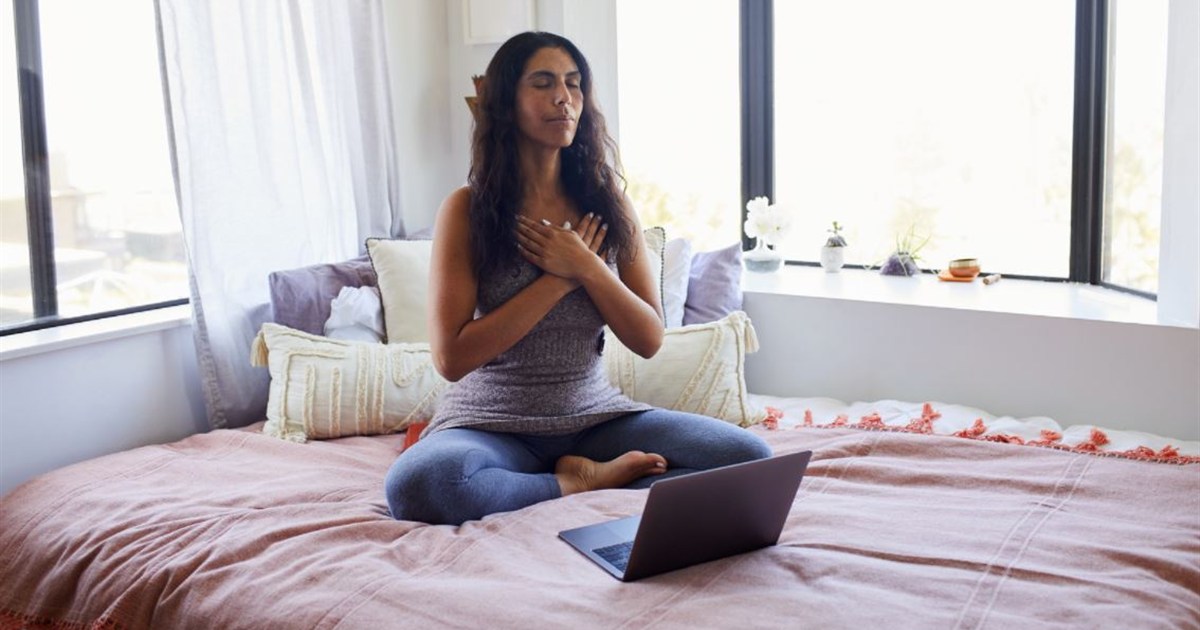
Chakra meditation may give you a spiritual language for exploring steadiness, compassion, expression and connection. As part of a wellbeing routine, it can be a place to pause and listen to yourself without expecting the practice to solve every difficulty.
Let the routine sit alongside everyday care: rest, relationships, practical support and any healthcare you need. Spiritual meaning and professional care do not have to compete.
What you are hoping for matters
Begin by naming a modest intention. You might want a quiet transition after work, space to reflect on a decision or a few moments of kindness toward yourself.
“I want to create a pause” is different from “I must unblock a center to make an illness disappear.” The first gives you room to explore; the second can create pressure and delay care that matters.
Keep the health claims specific
The NCCIH overview of meditation discusses varied practices, possible benefits and limitations. Research on meditation generally does not prove that a particular chakra routine treats disease or changes hormones.
You can find a practice personally helpful without making those claims. Equally, if it does not help you relax, that is not evidence that you are spiritually blocked or doing something wrong.
Choose a comfortable starting point
Use a chair or another position suited to your body. Keep your eyes open if preferred. Let the breath remain ordinary rather than forcing a pattern, and begin with a manageable period.
You might focus on a theme rather than an internal body point. For example, “support” can bring a helpful person or a stable routine to mind. If attending to the body feels unsettling, notice the room or an object instead.
The gentle chakra meditation guide offers a seven-center sequence with adaptable prompts.
Notice without diagnosing
After a session, write a short observation: what you chose to focus on, how it felt and whether you want to repeat it. A neutral experience is an honest answer.
Tension, tingling or an emotional memory does not establish that a specific chakra is causing a health problem. Do not use a chart to explain away new or persistent symptoms. Discuss those with a qualified clinician rather than assuming they are part of an energetic process.
Keep choice inside the routine
You may use a quiet practice before bed, but you do not have to remain in bed struggling to meditate when sleep is difficult. Persistent sleep problems deserve appropriate advice instead of increasingly long sessions.
If a practice makes you more distressed, stop and return to your surroundings. Consider a gentle walk, conversation or another familiar activity that feels steadier. Ask for healthcare guidance when distress persists or when you are unsure whether meditation suits your situation.
Let a reflection lead to ordinary support
A theme of expression might lead to asking for help. A focus on kindness might remind you to soften an unrealistic demand on yourself. These are small ways to connect a spiritual practice with the rest of your life.
Do not change prescribed treatment because a session feels powerful or a teacher says you are healed. Any decision about treatment belongs with the clinician responsible for your care.
For a more focused practice, explore heart-centered meditation. The spiritual-home guide can help you create a place to pause without requiring a perfect setting or special equipment.
Wellbeing can include your spiritual life without making it a test you must pass.
I have never tried chakra meditation before, but I’m definitely curious about it now.
This article provides a clear explanation of each chakra and their functions.
I’ve been struggling with insomnia, maybe I should give chakra meditation a try.
This article doesn’t provide enough scientific evidence for the effectiveness of chakra meditation.
So all I need to do is balance my chakras to be healthy? Sounds easy enough!
I have tried chakra meditation and it really helped me to relax and sleep better.
Chakras are such an interesting concept, but I’m not sure if I believe in them.
Chakra meditation is such a powerful tool for relaxation and balance.