

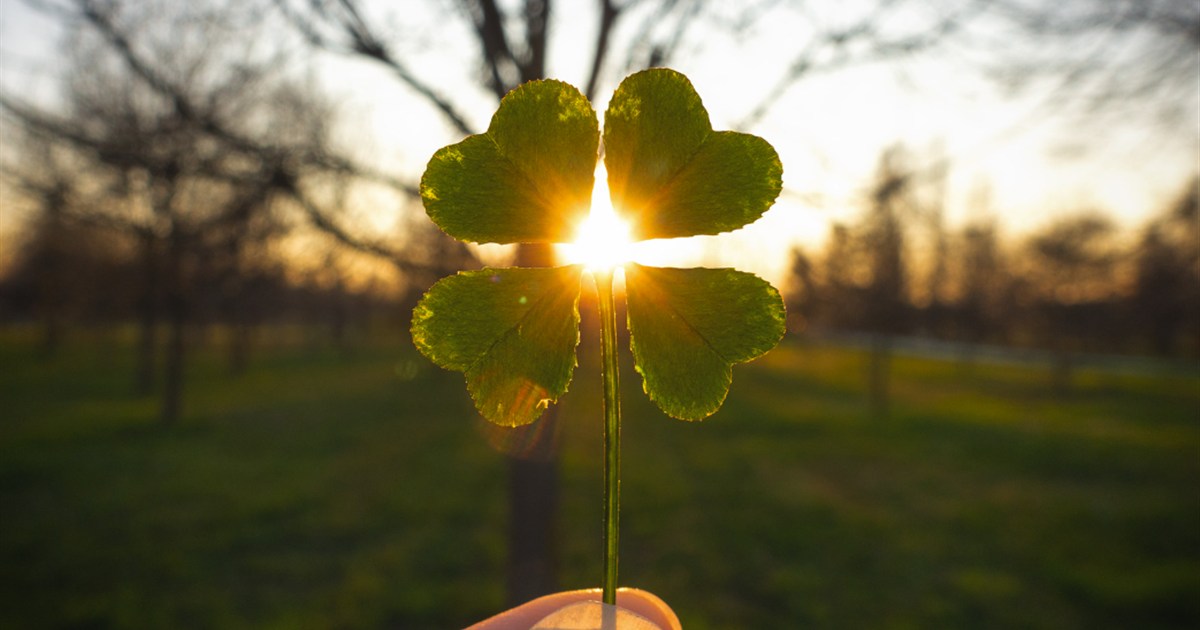
A four-leaf clover, a pendant from someone you love or a small stone from a memorable place can feel like more than an object. A lucky charm may carry a prayer, a family story or the reassurance of a moment when you felt supported.
You can value that spiritual connection without asking the charm to control everything that happens. A useful keepsake brings you back to yourself; it need not become a condition you must satisfy before living your life.
Begin with the connection, not the price
The meaning may come from who gave you the object, where you found it or what you were ready to change. You do not need a rare material or an expensive ritual to make a personal association worthwhile.
If you found a four-leaf clover, you might remember the surprise and happiness of that moment. An inherited piece may remind you of a loved one’s steadiness. Let the story be specific to you.
Choose an intention you can practice
Instead of “This must make the interview go well,” try “This reminds me to pause, listen and speak clearly.” The second intention leaves room for preparation, other people’s choices and an outcome you cannot fully control.
Before an important event, you might hold the charm briefly, name the quality you want to bring and then put your attention on the task. There is no required number of repetitions and no penalty for forgetting.
A supportive reminder
“This pendant reminds me that I can ask for help.” You remain free to act whether or not it is with you.
A rule worth loosening
“If I leave without it, something bad will happen.” If the ritual creates fear or restricts your day, step back from that rule and seek support if needed.
Can you give a charm to someone else?
A charm can make a thoughtful gift when it is offered as affection, encouragement or a shared memory. Tell the person why you chose it, without claiming that it guarantees protection or obliging them to carry it.
Let the recipient decide how to use it. They may have different beliefs, dislike jewelry or prefer to keep it in a drawer. A gift does not lose its kindness because someone relates to it differently.
What if a lucky object breaks or disappears?
It is understandable to feel sad when a meaningful keepsake is damaged or lost. That feeling does not establish that you have been abandoned spiritually or that a run of bad events is beginning.
You can repair it, replace it, write down its story or keep a photograph. If you choose a new object, it need not compete with the old one. The relationship or intention it represented can remain part of your life.
Keep spending and decisions separate from luck
Do not use a charm as a reason to increase gambling, ignore a contract, skip preparation or disregard a safety concern. Feeling fortunate is different from having new information about risk.
Be cautious if someone uses fear of a curse or lost protection to pressure you into repeated purchases. You can enjoy spiritual objects while refusing urgent demands for money or secrecy. A respectful seller or practitioner should allow questions and a free choice.
A ritual that ends with an action
Choose one sentence: “When I see this, I will remember ____.” Then add a small action, such as reviewing your notes, making a call or taking a calm pause before replying.
For more ways to bring an intention into daily life, explore manifesting with practical steps. The charm can accompany your effort without becoming responsible for the result.
I had no idea that clovers had so many different meanings and significance! This article was very informative and interesting.
This article seems to be based on superstitions and not actual facts. There’s no scientific evidence to support these claims.
The part about finding a no-leaf clover is quite intriguing. It almost sounds like a warning from a fairy tale!
It’s amusing how much significance humans have attached to a simple plant like the clover. The superstitions are quite amusing.
The history of the different leaf clovers was really fascinating. I never knew about St. Patrick’s connection to the three-leaf clover.
So finding a four-leaf clover is really rare, but I’ll definitely keep an eye out for one now!
If finding a four-leaf clover means good luck, then I’m definitely going hunting for one soon!
I’m skeptical about the magical properties of clovers, but it’s fun to learn about the folklore surrounding them.