

Quick answer
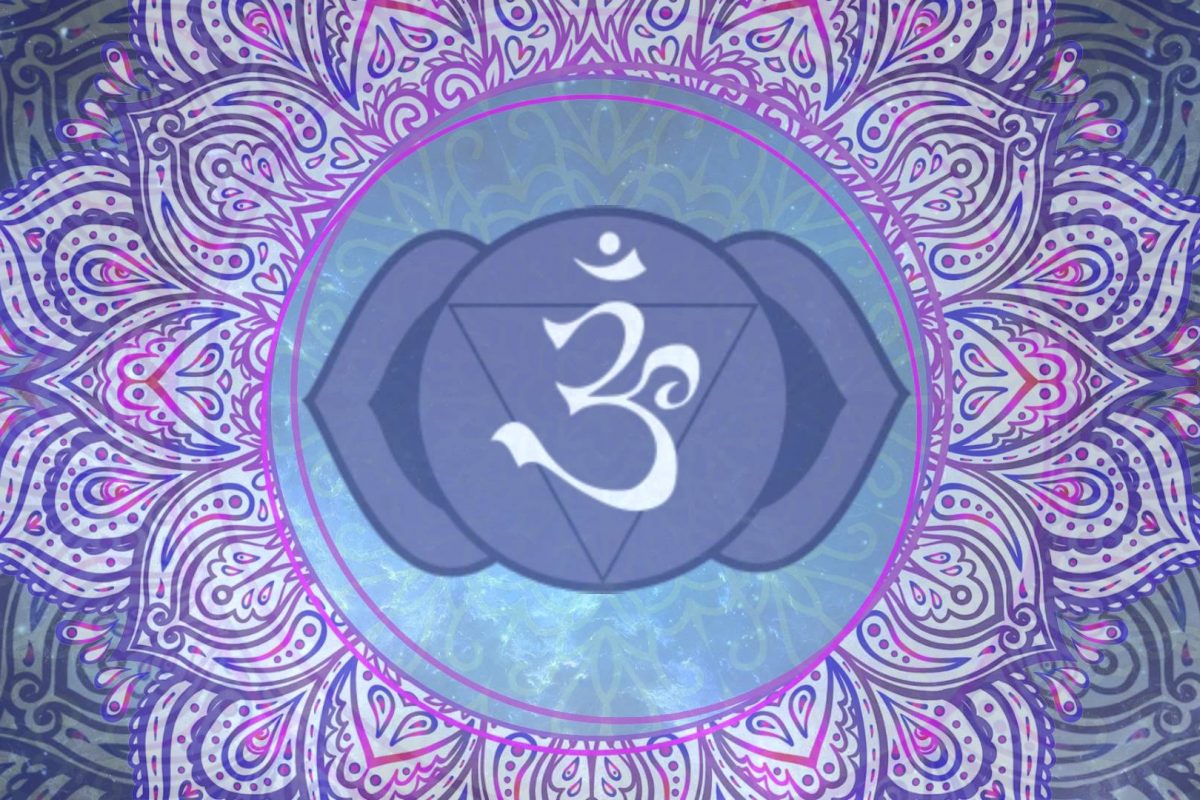
Ajna, whose name means command or perceive, is the sixth of the seven chakras in the classical map, placed between the eyebrows and drawn as a lotus with two petals. Later Western versions gave it the colour indigo and made it the seat of intuition and insight. It is a map, not anatomy: no organ sits there, and the pineal gland, often called the third eye, is deep in the brain and regulates melatonin and sleep. When people say their third eye is blocked they usually mean brain fog, indecision, poor sleep, too many screens, or not trusting their own judgement. When they say it is overactive they usually mean rumination, daydreaming or headaches. The map is useful as a way of naming those states, and the practice that goes with it is simple attention training, five minutes of it below. The full guide is Opening the Third Eye: Ajna, the Pineal Myth, What the Reported Signs Really Are, Eight Attention Practices, and What to Avoid.
Ajna: the classical map and what the language points to today
| Term | In the classical map | What it usually points to now |
|---|---|---|
| Ajna | The sixth chakra, between the brows, a two-petalled lotus, the seat of command | Attention, judgement, the ability to see clearly |
| Bhru madhya | Literally the centre of the brows, the point of focus in several meditations | A spot to rest the gaze, nothing more |
| Indigo | A colour added in twentieth-century Western systems | A visual aid for the map; nothing about the body is indigo |
| Blocked third eye | Not a classical term | Fog, indecision, poor sleep, screen fatigue, self-doubt |
| Overactive third eye | Not a classical term | Rumination, fantasy, headaches, too little grounding |
| The pineal gland | Unknown to the classical texts | A small gland deep in the brain that makes melatonin; it is not an eye |
- Sit upright, feet flat, and set a timer for five minutes.
- Rest a soft gaze on one point on the wall, or close your eyes and rest attention between the brows.
- Breathe in for a count of four and out for a count of six.
- Each time the mind wanders, notice where it went and come back to the point; that return is the exercise.
- At the bell, name one thing you know clearly about the day ahead, then get up.
What the old version got wrong: It called ajna the fifth chakra (it is the sixth), listed a brown chakra as one of its names (bhru madhya means centre of the brows), and said psychic seeing comes from it. The map is well described in the Britannica entry on chakras. For the sensations people report, see signs your third eye is opening.
Read the full third eye guide
Ajna, the pineal myth, what the reported signs really are, eight attention practices, and what to avoid.
This article really helps to clarify the meaning and significance of the third eye chakra. Very informative!
The idea of reaching a super consciousness through the third eye chakra is intriguing, although it requires an open mind to fully embrace.
The explanation of the yogic perspective on the third eye chakra’s role in separating the I-consciousness is thought-provoking.
The concept of using imagination and balanced chakras to strengthen psychic giftings is quite empowering.
I appreciate the emphasis on balancing chakras to optimize energy. It’s a holistic approach to well-being.
I find it fascinating how the third eye chakra is associated with the color blue or purple. The energy aspect is very interesting.
I’m not convinced about all this talk of psychic abilities and super consciousness. Seems a bit far-fetched to me.
So, if I charge my third eye, will I gain superhero powers? Just kidding…but this was an interesting read!