

A spiritual home cleanse can mark a move, a difficult season or a wish to begin again. You might understand it as renewing the energy of your space, inviting blessing or simply giving your intentions a place to settle. It can be quiet, personal and entirely smoke-free.
Start with care for the home and the people who live there. A ritual does not have to compete with cleaning, maintenance or an honest conversation; each can support a fresh beginning in its own way.
Deal with physical warning signs first. If a carbon-monoxide alarm sounds or you suspect exposure, leave for fresh air and call your local emergency number from outside. Do not stay to investigate. The CPSC’s carbon-monoxide guidance explains the urgent response and the importance of working alarms.
Choose what you want to welcome
Rather than starting with fear about what might be wrong, name what you want the home to hold. Rest, honesty, creativity, welcome and privacy are all possible intentions. Choose one that you can express in daily life.
Try: “May this be a place where we rest and speak with care.” If you share the space, ask what matters to the other people there. A spiritual reset should not become a reason to discard someone else’s belongings or insist that everyone participate.
A four-part smoke-free home reset
- NoticeChoose one room and one intention. Check what needs practical attention before changing the atmosphere.
- CareClear an accessible surface, clean what you can and address a small maintenance task. Work within your energy and budget.
- Mark the momentUse a familiar prayer, gentle music, a quiet pause or a flameless light. Let the practice fit your beliefs.
- Carry it forwardChoose one daily habit that supports the intention. End the ritual without waiting for a dramatic sign.
You can do these stages over several days. A lived-in home does not have to become spotless or minimal before it can feel spiritually meaningful.
Refresh the atmosphere without masking a problem
Notice light, sound, comfort and airflow. Open curtains when useful, soften an uncomfortable glare or make a route easier to move through. Ventilate appropriately when outdoor conditions permit; opening every window on a fixed schedule is not right during outdoor smoke, unsafe weather or other hazards.
The EPA’s indoor-air guidance emphasizes controlling pollutant sources, suitable ventilation and filtration. A scent, plant or symbolic cleanse should not be used instead of addressing damp, fumes or a faulty appliance.
Bring in living plants thoughtfully
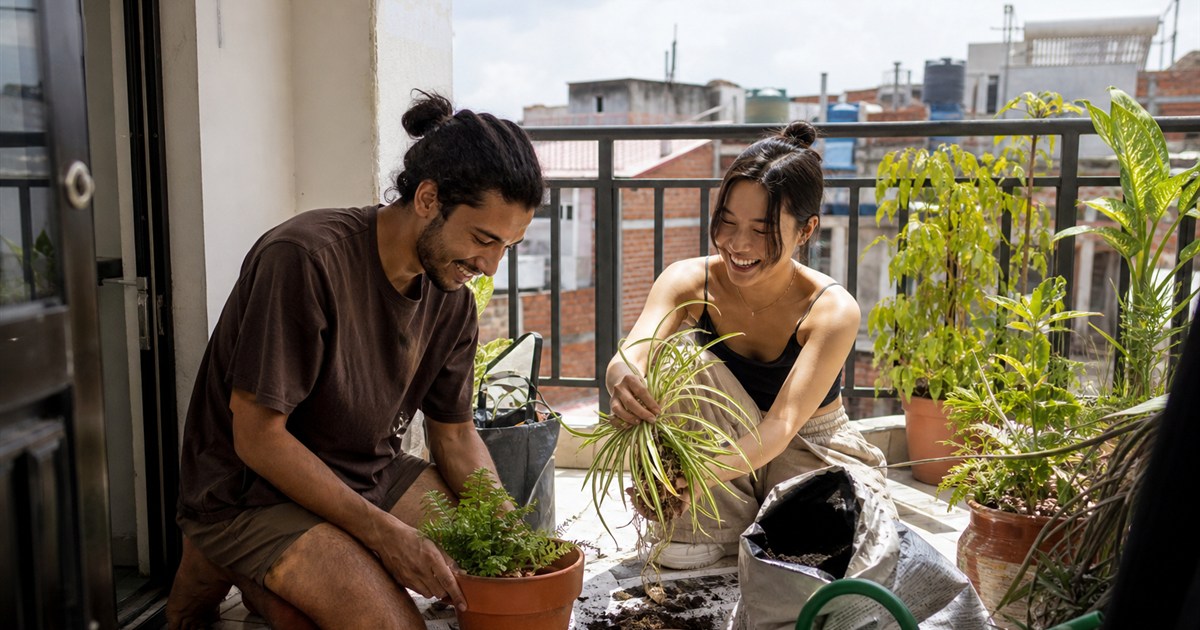
A plant can represent growth and become a small practice of attention. Choose one you can care for rather than buying a collection for a promised energetic effect. Match its light and watering needs to the actual location; use a suitable container and drainage.
For households with cats or dogs, the ASPCA’s pet-friendly plant list includes spider plant, Boston fern and parlor palm. Confirm the exact species before buying. “Non-toxic” is not an invitation to let an animal chew a plant, and common names can refer to different species.
Do not take a struggling plant as a spiritual warning. Check its conditions and seek growing advice. The fairy-garden guide offers a practical miniature project if you enjoy combining plants with imagination.
Use sound, light or prayer without pressure
You might read a familiar blessing, play music softly, ring a small bell or sit in silence. Ask first about sound and sensory needs in shared spaces. A battery-operated light can create a focal point without a flame.
You do not need incense, essential oils, sprays or a simmering pan. Smoke and scent may be unwelcome or unsuitable for household members and pets. A smoke-free practice is a complete choice, not an inferior substitute.
Respect the traditions you draw from
Smudging is not a generic label for every home refresh. Specific Indigenous communities have their own ceremonial relationships with plants and their own protocols. The American Indian Health Service of Chicago describes the continuing cultural significance of sacred medicines and the diversity of Native traditions.
If a practice is outside your tradition, learn from the community rather than assuming a product label grants permission to reproduce a ceremony. You can create a personal smoke-free ritual using your own prayer or intention without claiming another community’s practice.
Let your home remain yours
A meaningful reset need not create fear of visitors, secondhand furniture or missing a ritual. You can keep inherited objects that you love, clean and repair a used chair, or put away a possession that brings up difficult memories. These are choices, not tests of spiritual purity.
If you consult a practitioner, look for respect, a clear scope and freely agreed fees. Refuse pressure based on threats, secrecy or ever-increasing payments. No one should make your safety feel dependent on buying more spiritual work.
Explore making your home spiritual for a daily practice, or feng shui and a supportive layout for room arrangement. The aim is a home you can inhabit with more care, not a ritual you must keep getting right.
Frequently asked questions
1. What does it mean to spiritually cleanse a home?
It is a practice for renewing the atmosphere and intention of a space within your beliefs. You might combine ordinary care with prayer, reflection or a familiar ritual. You do not have to prove that a room contains harmful energy before choosing a fresh start.
2. Can I cleanse my home without smoke?
Yes. Spoken intention, a familiar prayer, gentle music, a quiet pause or a flameless light can mark the moment. Smoke is not required for a personal spiritual reset.
3. Why does my house feel heavy after an argument?
A room can carry strong associations with what happened there. A reset may help mark a new beginning, but honest conversation, apologies and practical boundaries still matter. Do not make the ritual a substitute for addressing ongoing harm.
4. What if I suspect carbon monoxide?
Leave immediately for fresh air and call your local emergency number from outside. Do not wait for a ritual, stay to investigate or rely on opening windows. Do not re-enter until emergency responders say it is safe.
5. Do I need expensive cleansing supplies?
No. Start with what you have and an intention that makes sense to you. You do not need a special kit, a rare crystal or a paid ceremony to create a personal moment of renewal.
6. What can I say during a home reset?
Use your own words, such as: May this home hold rest, honesty and care. Choose a prayer from your own tradition if you prefer. There is no universal phrase you must get exactly right.
7. Should everyone in the household take part?
Invite rather than require participation. Ask before changing shared spaces, using sound or scent, or moving meaningful possessions. People can share a home comfortably without sharing every spiritual belief.
8. How often should I cleanse my home?
Choose a rhythm that feels useful, such as after a move or at the beginning of a season. There is no required schedule. Repeating a ritual out of fear that missing it will cause harm is a reason to simplify it.
9. Can plants be part of the practice?
Yes. Caring for a suitable plant can express growth, attention or renewal. Choose a species that fits the light, space and household, and follow its care needs rather than a symbolic watering rule.
10. Which houseplants should I consider if I have pets?
The ASPCA lists spider plant, Boston fern and parlor palm among pet-friendly options. Check the exact plant identity before buying, because common names can be confusing. Keep plants from being chewed and contact a veterinarian about suspected harmful exposure.
11. Do plants replace ventilation or air filtration?
No. Enjoy them as living plants, not as a substitute for managing indoor pollutants. Address sources, ventilation and any appropriate filtration for your home.
12. Is a dying houseplant a bad spiritual sign?
Not necessarily. Check light, water, drainage, temperature and pests first. A plant struggling in an unsuitable spot is not a verdict about your worth, your spiritual practice or the future of your household.
13. Do I need to open every window?
No. Consider outdoor smoke, weather, security and the needs of people and pets. Use appropriate ventilation for your home when outdoor conditions allow, rather than a rigid all-windows rule.
14. Is feng shui the same as spiritual cleansing?
They can overlap in a personal routine, but they are not identical. Feng shui has Chinese cultural roots and varied approaches to place and arrangement. A brief room refresh is not a complete feng-shui assessment.
15. What if I cannot rearrange my furniture?
Work with what is possible: a clear route, useful lighting, a comfortable seat or one accessible surface. Rental restrictions, disability, space and shared preferences are real considerations, not spiritual failures.
16. How should I approach smudging respectfully?
Learn from the specific Indigenous community involved rather than treating all ceremonies as interchangeable. Protocols vary. For a personal home reset, choose a smoke-free practice from your own beliefs instead of copying unfamiliar ceremonial steps.
17. Should I pay someone to cleanse my home?
You may choose a spiritual service freely, but ask what is offered and agree to a clear fee. Avoid guarantees, escalating payments, demands for secrecy or threats that you will be harmed if you refuse. Physical hazards need qualified practical help.
18. What if the home still feels unsettled afterward?
You can stop and return to ordinary routines. Look at comfort, maintenance, relationships and anything that remains unresolved. A ritual does not have to produce a dramatic feeling, and an unfinished emotion does not mean you performed it incorrectly.
This article provides a succinct overview of various cleansing methods using botanicals. Each method has its unique benefits, and it would be interesting to see more research on their psychological effects on mood and well-being.
I love this holistic approach! Cleansing your space with nature’s gifts feels so much better than artificial fragrances. Plus, who wouldn’t want their home filled with the comforting scent of vanilla or cinnamon? 🍂❤️
“Dragon’s Blood for energetic protection?” Sounds cool in theory, but perhaps we should focus on scientifically backed methods for emotional well-being instead of relying on mystical resin! 🤔
“Sandalwood wraps around you like a warm blanket.” Haha, I’m picturing myself in an oversized blanket made of sandalwood now! 😂 But seriously, some humor helps lighten the mood on topics like these.
“Baking can leave a fresh scent that is inviting?” Now that’s a groundbreaking revelation! I guess I’ll just bake cookies every day then—who needs incense when you have chocolate chip goodness?! 🍪
“Cinnamon for warmth and joy?” What about for my morning coffee? This article could have included practical tips on integrating these botanicals into daily life beyond just rituals. Good read though!
Honestly, this sounds like a bunch of pseudoscientific nonsense. Cleansing with herbs? Really? There’s no evidence that any of this actually works. If it makes you feel better, great, but let’s not pretend it has real effects.
I completely agree! People often fall for these trends without thinking critically about the facts. Just because something is marketed as ‘natural’ doesn’t mean it’s effective.
Exactly! It’s important to approach such claims with skepticism. There are many ways to improve your environment that have proven results without resorting to herbs or incense.
What a wonderfully enlightening article! I absolutely love the idea of using herbs and botanicals to cleanse my home. It’s fascinating how these natural elements can influence our energy. Can’t wait to try them all! 🌿✨