

How the Pandemic Changed America
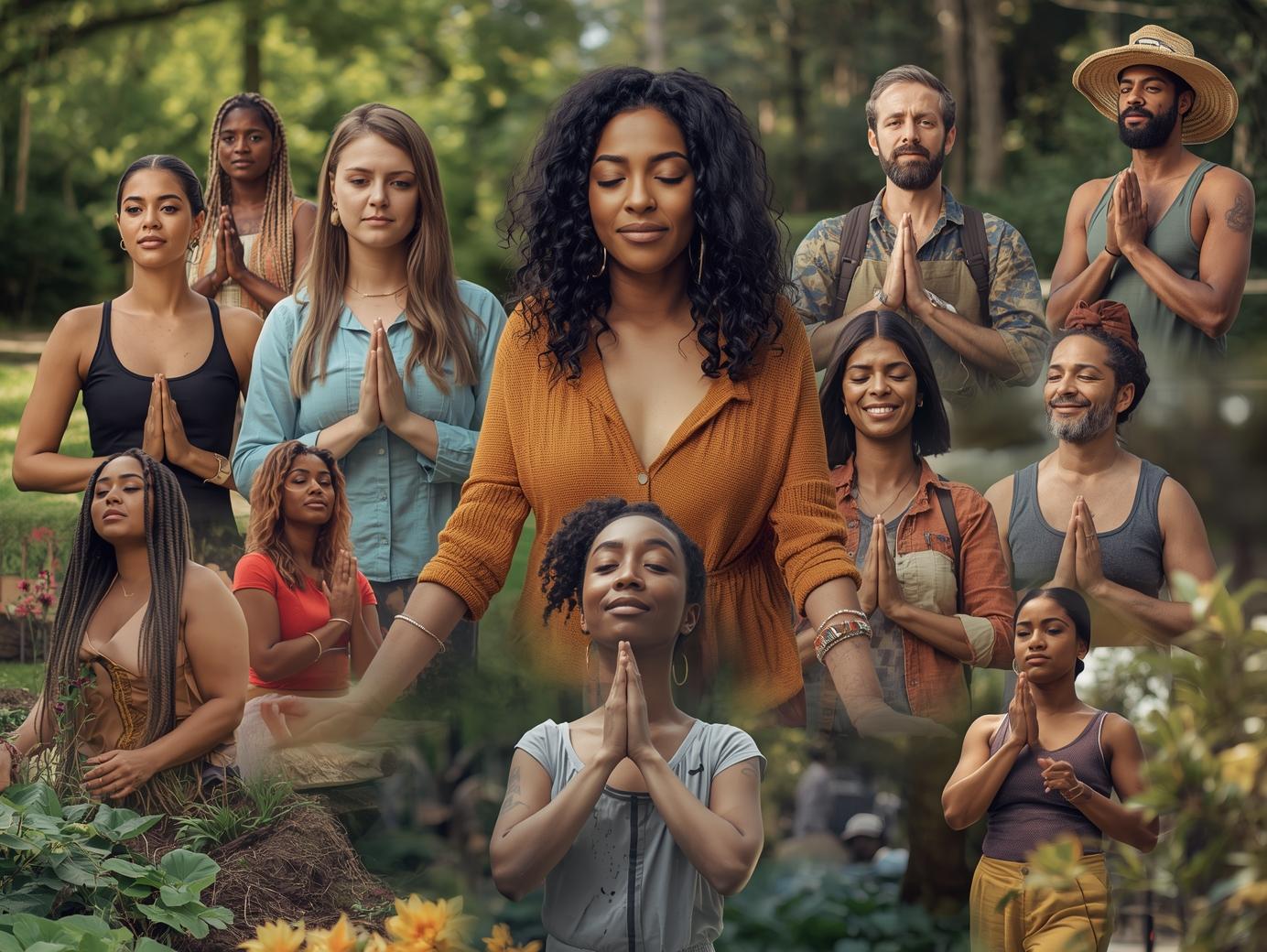
The pandemic caused many changes for America, but one of the biggest cultural shifts was that millions of people started rethinking what spiritual wellness meant to them. Not being religious or moral, but a deeper and quieter inner work that helps people to go through an unpredictable world. When things that define our lives collapsed, offices, social circles, communities, and routines that Americans were used to were faced with questions that they had for years, such as:
- What do I believe in?
- What makes me grounded?
- What keeps me safe?
- What makes my life meaningful?
The American Psychological Association showed that there were big spikes in emotional overload, anxiety, and loneliness during the pandemic. This pressure caused Americans to look towards coping mechanisms and new forms of spiritual expression. Practices like quiet meditation became popular. In the year 2020, mindfulness apps were downloaded at record levels. People were lighting candles, pulling tarot cards, writing out intentions, and trying to clear energy. They started journaling their fears, and many joined online circles where they talked about what they were feeling with strangers.
Spiritual wellness was no longer a trend but an emotional survival tool. Then something else happened. Americans started looking at intuition in ways that even surprised psychics. People started listening to their gut feelings, and they noticed signs and synchronicities. They started being curious about emotional cues. The lines between having intuition and mental health became one, and people didn’t see it as mystical but as human. Americans didn’t stop spirituality during the pandemic, but they just reinvented what it was.
How the Pandemic Affected Emotions
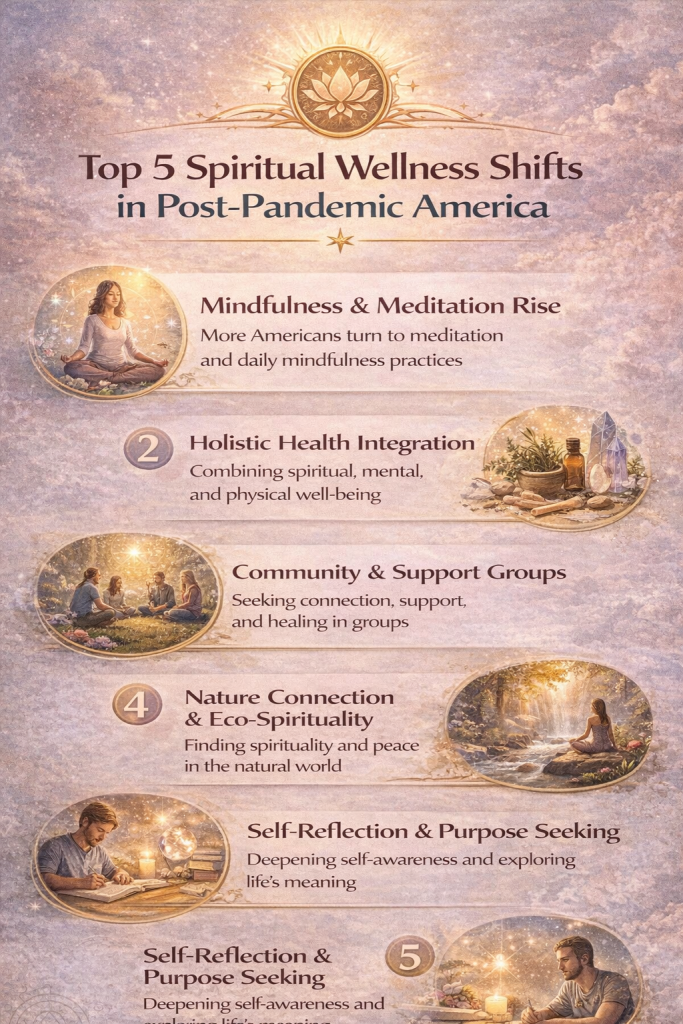
When everything in life came to a standstill, Americans felt shocked, and their emotional system was challenged. According to the National Institute of Health, it talks about how the global crisis increased physiological stress responses and disrupted emotional regulation. This could have been because of the loss of a loved one, a loss of a job, a routine getting off, whatever it was, the pandemic created a collective emotional disorientation. Some people said that they felt:
- Ungrounded.
- Heavy.
- Overwhelmed.
- Uncertain.
- Ungrounded.
- Aware of their inner world.
The collapse that was happening in the world created a place where people had to look internally.
How Grounding Helps
When stress was high, Americans were trying to find practices that would help to calm their nervous systems. They tried things like guided meditation, grounding, journaling, and deep breathing. These weren’t just fads; but they were tools that helped to regulate a person’s fight or flight response when times were uncertain.
According to Harvard Health, mindfulness and grounding can help reduce stress hormones and support emotional resilience.
When Personal and Self-Guided Spirituality Rose
A huge shift has happened across the country. People didn’t start meditating because it became a trend, and they did it because their minds felt too loud. They pulled tarot cards not to predict the future, but to better understand what they were feeling. Candles became part of nightly routines because lighting one brought a little peace. Even YouTube psychics suddenly felt comforted having someone to help make sense of the emotional swirl.
Real-Life Example
A woman in Chicago had never meditated before the lockdown. She tried a short breathing video one night when she couldn’t sleep. “It was the first time my thoughts weren’t yelling at me,” she said. From there, she started journaling, setting intentions, and eventually booked her first psychic reading. It wasn’t about rejecting logic, but it was about finding calm when everything around her felt uncertain.
Americans weren’t running away from life. They were doing whatever they could to stay grounded in it.
As Spiritual Wellness Changed in America
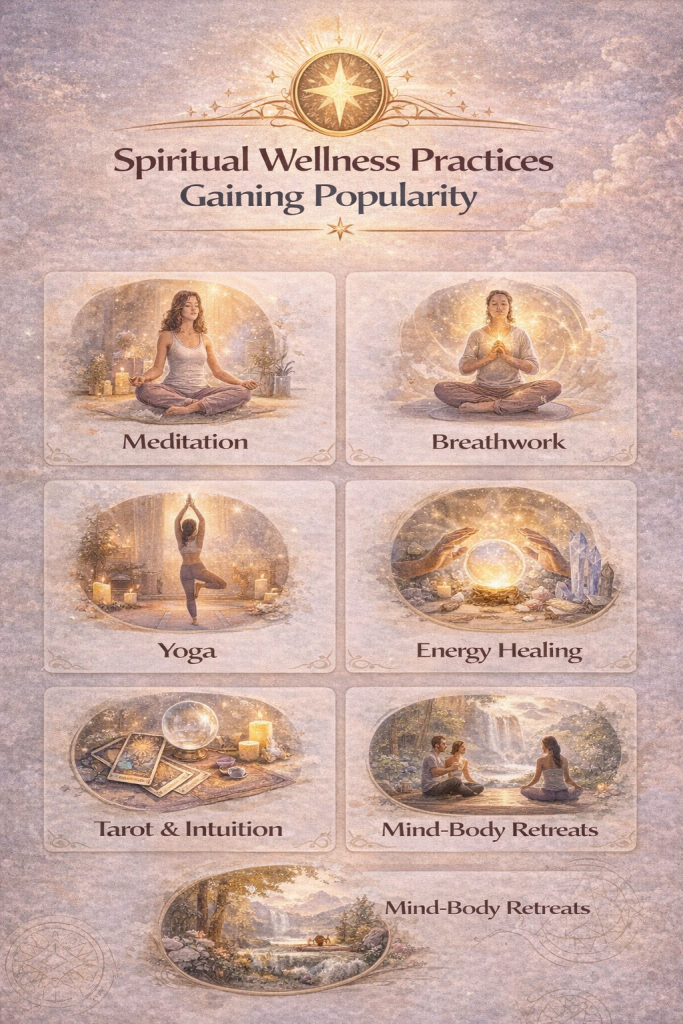
Before the pandemic, spirituality was often treated like a hobby. Things like yoga classes, vision boards, or a quick meditation app were seen as extras; they were nice, but not necessary.
That changed when life got heavy. Spiritual wellness became a survival tool. People leaned on it to help them:
- Become less anxious.
- To feel less alone.
- To help make decisions from a calmer place.
- To find small moments of hope.
Spirituality in the U.S. is now less about big beliefs and more about practical emotional support. It’s personal. It’s flexible. And for many, it’s a lifeline, helping them feel stronger, steadier, and more connected to themselves when the world gets overwhelming.
Fitness to Emotional Resilience
Breathwork, meditation, grounding, and yoga aren’t just about aesthetics or being flexible, but they have helped:
- Regulate emotions.
- To stop panicking.
- To help get past chaotic days.
- To create emotional safety.
According to the Mayo Clinic, mindfulness doesn’t just get rid of anxiety, but it regulates thoughts and increases emotional clarity. This shows how science validates normalized spiritual practices for millions of people around the world when they were once skeptical of them.
Why People Have Their Own Ideas of Spirituality
In recent years, Americans have started building their own versions of spirituality by mixing psychology, intuitive practices, and wellness. People began grounding, journaling, exploring shadow work, clearing energy, and even pulling tarot cards and not because they were following a strict belief system, but because they were trying to feel emotionally balanced. This “build-your-own” spirituality grew from personal experience rather than rules or tradition.
One major part of this shift is what many now call emotional hygiene. Just like washing hands after touching something messy, people started clearing emotional residue after stressful days, using breathwork to calm down after arguments, journaling before bed, or meditating before meetings.
A nurse in Boston explained that lighting incense after work wasn’t spiritual for her, but it was a survival tactic. Millions of Americans quietly did the same. They weren’t becoming “woo.” They were simply learning to turn inward with intention.
Understanding a Spiritual Connection
When the pandemic forced physical distance, a different kind of closeness appeared. People found emotional and spiritual community through screens, like in Zoom circles, TikTok lives, group chats, and online readings. Instead of gathering in churches or yoga studios, people gathered in virtual breathwork sessions, meditation groups, and anxiety-support threads. It wasn’t about everyone believing the same thing. It was about not feeling alone.
Something unexpected also happened: people began talking about their spiritual well-being in places where it used to feel awkward, like at work. Remote coworkers casually mentioned grounding before a meeting or journaling breakthroughs. Some even shared tarot pulls that helped them understand a stressful project. These conversations used to be taboo, but suddenly they were normal.
This new form of spirituality blended emotional awareness, intuitive listening, psychological growth, and simple grounding practices. A group of teachers in California created a weekly “reset circle” during remote learning, just to cope with burnout.
They meditated together, shared intuitive thoughts, and supported one another. Over time, it became a real spiritual community. The pandemic didn’t make connections disappear, but it helped people reinvent how they connect, support, and heal together.
Connecting Psychology and Spirituality
One of the biggest changes in post-pandemic America is how psychology and spirituality have begun to work together. Instead of choosing therapy or intuition, many people now use both. They don’t see spirituality as a replacement for mental health, but they see it as something that supports healing from a different angle.
As more people dealt with stress, grief, and feeling overwhelmed, spirituality itself became more trauma-aware. People started asking meaningful questions about their emotional experiences: Why do certain people leave me drained? Why does conflict stick to me like residue? Why do I lose my balance after certain interactions? And why does my intuition show up most clearly when I’m calm?
These are the same kinds of questions therapists ask, but are just expressed in spiritual language. This blending helped Americans explore healing in a fuller, more human way, honoring both the mind and the inner voice.
Using Emotional Regulation as a Spiritual Practice
According to the National Institute of Health, mindfulness practices can improve emotional regulation and stress resilience. This research was done during the pandemic, when people in America started adopting emotional regulation as part of their spiritual act. Spiritual wellness became:
- Naming emotions instead of dismissing them.
- Making boundaries instead of hiding needs.
- Grounding before reacting.
- Using intuition to look at emotional truth.
Intuition Becomes Trustworthy Again
For a long time, people were told that intuition wasn’t “real” or serious enough to guide decisions. But over the last few years, that belief has changed. Therapists now talk openly about inner knowing, body signals, and emotional patterns, the ideas that psychics have been using forever.
People are seeing that intuition isn’t magic. It’s the mind and body working together to recognize what feels right.
Real-Life Example
A marketing manager in New York started paying attention to her gut feelings during the pandemic. She noticed they were almost always correct, especially about people and situations. Reading articles about intuition and stress helped her feel more confident in trusting what she felt instead of ignoring it.
Intuition now sits at the center of four important things:
- Emotional intelligence.
- Psychological understanding.
- Nervous-system awareness.
- Spiritual grounding.
Blending these ideas helps people feel stronger and more in tune with themselves.
The Growth of Intuition Culture
Intuition didn’t just come back, but it became mainstream. People everywhere began talking about signs, dreams, and those strange moments where you just know. And a lot of this happened online.
Social media turned intuition into everyday language. On TikTok and Instagram, people shared things like:
- Repeating numbers, they kept seeing.
- Dreams that helped them to understand their emotions.
- Gut feelings that later seemed to make sense.
- Random times that felt like guidance.
It wasn’t about telling the future. It was about learning to trust yourself.
Intuition Becomes a Decision-Making Tool
During stressful times, Americans started asking deeper questions, like:
- “What choice feels peaceful?”
• “What relationship supports who I’m becoming?”
• “Is this job aligned with my values?”
Instead of waiting for someone else’s approval, more people turned inward for clarity. Even workplaces began to shift. Leaders talked about “gut checks,” and teams used short grounding exercises before big decisions. Intuition wasn’t seen as strange, but it was seen as smart.
Real-Life Example
An engineer lost his job during the pandemic. Instead of running back to a career that drained him, he listened to a quiet inner nudge to study UX design. Two years later, he said following his intuition was one of the best decisions of his life.
The truth is simple: The pandemic didn’t create an interest in intuition, but it just gave people the quiet needed to notice it.
Energy Work as Modern Mysticism
Americans started trying rituals and energy practices, and changed what modern spirituality looks like.
Using Rituals as Emotional Regulators
Rituals can give structure when things feel hopeless. Even people who aren’t spiritual would try things like:
- Burning incense.
- Lighting candles.
- Cleansing their homes.
- Washing their hands with intentions.
- Putting meaningful objects close to their workplace.
These weren’t seen as superstitions, but they were seen as emotional grounding.
When Energy Goes Mainstream
Practitioners realized that they had to start doing things online so that people could get the experiences that they needed. Here are some things that happened:
- Reiki sessions moved online instead of just in person.
- Breathwork shops became popular.
- Guided grounding happened in the workplace.
Many people said that these experiences were like emotional chiropractic work where their nervous system needed adjusting.
Tarot Cards and Intuition
When the world shut down, a lot of people felt alone with their thoughts. Tarot and intuitive readings suddenly became a lifeline, and not because people wanted to predict the future, but because they needed help understanding how they felt. Pulling a single card or watching an online reading gave people something rare at that time: a moment of emotional reflection and a sense that they weren’t facing everything alone.
Real-Life Example
A single dad in Texas started drawing a tarot card before each day of homeschooling. He didn’t use the card to tell him what would happen, but he used it to choose how he wanted to show up. It helped him create a tiny ritual of intention and emotional grounding before the chaos began.
Modern mysticism wasn’t about escaping reality. It helped people cope with reality.
Why People Are Looking for Meaning in Life
Once life slowed down, deeper questions surfaced. After so much loss, pressure, and uncertainty, many Americans realized they didn’t want to go back to versions of themselves that were exhausted and disconnected. Instead, they asked:
- What truly matters to me?
- Who am I outside of constant busyness?
- How do I build a life that feels emotionally sustainable?
Spirituality, intuition, and reflective tools became the way people explored those questions, gently, privately, and at their own pace.
The search wasn’t for magic, but it was for meaning.
The Feeling of Being Grounded
According to the American Psychological Association, there were high levels of stress, loneliness, and emotional fatigue during the pandemic. These emotional states would trigger existential reevaluation, according to psychologists, and the reassessment is what really matters.
People didn’t just want comfort, but they wanted coherence.
Using Spiritual Awareness for Emotional Resilience
Many people started looking for spiritual practices because they offered things like:
- A sense of peace in chaos.
- Ways to regulate overwhelming emotions.
- Ways to process losses.
- A connection to something other than fear.
- A reminder that people had inner strength.
Spirituality started offering things that traditional ideas couldn’t, which was a sense of grounding that didn’t require physical stability.
Meaning-Making for Stress Recovery
According to the NIH, it says that meaning making is a way to increase stress recovery, and it can improve psychological flexibility. Different spiritual practices, including mindfulness and journaling, were ways that people could find coherence in an incoherent world.
Real-Life Example
One Oregon patient started doing simple moon check-in rituals once each month. They would go outside in the moonlight, take deep breaths, and ask what they needed emotionally. This wasn’t about religion, but it was a grounding tool that helped people to have meaning.
This didn’t come from magic or mysticism, but it came out of loneliness and necessity.
Spirituality and Work Life Balance
When the world paused, Americans finally noticed how tired they were. Remote work blurred the lines between home and stress, and people realized that productivity without emotional health leads straight to burnout. Spiritual wellness quietly stepped into the conversation, helping people check in with more than just their deadlines.
When Intuition Became Popular
Millions of people didn’t just leave their jobs, but they left roles that no longer matched who they were becoming. It wasn’t a rejection of work. It was a return to self.
The real question people asked themselves was simple: “Does this job feel aligned with who I am now?” And for many, the answer was no.
Spiritual Tools that Are Found in Workplaces
With remote work, tiny rituals became part of daily routines. People could finally take a moment for themselves without the constant pressure of being “on.”
- Five-minute grounding before meetings.
- Gratitude journaling between tasks.
- Quick tarot pulls for clarity.
- Breathwork to separate work from home life.
- Meditation breaks instead of coffee breaks.
Research from Harvard Health shows that mindfulness improves focus, emotional regulation, and problem-solving, which is why businesses began offering meditation programs and wellness benefits. Calm wasn’t a luxury anymore. It was a job requirement.
Boundaries and Spiritual Hygiene
People started protecting their energy the same way they protect their physical health. Boundary-setting transformed from uncomfortable to empowering.
Americans learned to say things like:
- “My energy is low today.”
- “I need time to center myself.”
- “I’ll respond when I’m grounded.”
These statements weren’t excuses. They were emotionally honest.
Real-Life Example
A tech team in California began every Monday Zoom call with two minutes of silent breathing. Some employees didn’t care about spirituality at all, but everyone felt calmer, more focused, and more connected. Productivity went up. Tension went down. Humanity came back to work.
Spiritual wellness started reshaping workplace culture without needing to call itself spiritual.
Understanding Spiritual Well-being and Emotions
Spirituality didn’t disappear. It simply changed language. Americans reached for words that made inner life easier to talk about, without rules or judgment. Here are some things that people talk about:
- Alignment.
- Energy.
- Grounding.
- Embodiment.
- Intuition.
- Boundaries.
- Presence.
- Emotional release.
This vocabulary lets people talk about spiritual experiences using everyday emotional truth.
When Spirituality Became Normal
People feel safer expressing what’s happening inside them. It’s now common to hear someone say:
- “I’m energetically overwhelmed.”
• “My gut is telling me something.”
• “That dream helped me understand my feelings.”
• “That conversation left emotional residue.”
These aren’t fringe ideas anymore, but they’re part of normal emotional awareness.
Real-Life Example
A 60-year-old man in Ohio told his therapist: “I don’t know if it’s intuition or anxiety, but something in me says I need to slow down.” A decade ago, that language would have felt unusual. Today, it’s familiar and valid.
The new spiritual wellness isn’t about escaping life. It’s about being more present in it.
Americans Turning to Psychics
One of the biggest changes that happened was the rise in psychic guidance. People didn’t just become superstitious; they started having introspection. Psychics gave them things that they needed, like:
- Clarity.
- Emotional validation.
- Intuitive ideas.
- Symbolic and dream interpretation.
- Compassion.
Psychic Readings Offer Support and Clarity
During the pandemic, facts and logic couldn’t always explain what people were feeling. Psychic readings filled that gap by offering emotional and energetic understanding. Instead of predicting the future, they helped people make sense of their inner world.
Psychics acted like translators for intuition. They helped people find words for the feelings already stirring inside them. This wasn’t a replacement for therapy, but it was another safe place to explore emotions.
Real-Life Example
A newly divorced woman in Florida tried a virtual psychic reading during lockdown. She said, “It felt like someone finally put my inner voice into words.” She didn’t want predictions. She wanted clarity, and she got it.
Psychics didn’t become popular because fear spread. They became popular because intuition woke up.
When Technology and Spirituality Combine
Before the pandemic, spiritual wellness was mostly something people did in person, like yoga classes, group meditations, or weekly gatherings. But when the world closed, spiritual connection opened up online.
Meditation apps grew fast because people needed something steady to hold onto. These apps turned simple practices like breathing and grounding into daily routines. What used to feel optional suddenly felt necessary.
They helped people:
- Slow down and breathe.
- Build comforting habits at home.
- Feel connected during isolation.
- Make spirituality part of everyday life.
Technology didn’t take spirituality away from real life, but it brought it into people’s real lives, right where they were.
Why Online Psychic Readings Normalized
During lockdowns, virtual psychic readings suddenly became common. People could explore their intuition without worrying about judgment or walking into a metaphysical shop. With a quick video call, guidance felt accessible, private, and comforting.
Many who never would’ve tried a psychic reading in person felt open enough to book one online, especially during the uncertainty of the pandemic.
Technology didn’t make psychic work less real. It made it easier to reach the people who needed it most.
Social Media and Spirituality
Platforms like TikTok and Instagram became huge support systems for intuitive curiosity. Short videos offered little moments of guidance when people felt overwhelmed or alone. It wasn’t just entertainment. It was an emotional connection.
These digital communities provided:
- Emotional support.
- Intuitive insight.
- Humor and relatable struggles.
- Shared healing experiences.
- Safe conversations about fear and growth.
Algorithms quietly delivered wisdom straight to people who needed a boost that day.
Real-Life Example
A teenager in Arizona said she learned grounding techniques from TikTok during lockdown and still uses them today. “I know it sounds weird,” she said, “but TikTok taught me how to breathe again.”
Social media didn’t weaken spirituality. It helped more people find their way to it.
Pandemic Community and Rituals
During and after the pandemic, Americans had to rethink what it means to gather, support each other, and heal together. Even though people lost access to physical spaces like churches, studios, and community centers, emotional and spiritual connections grew in new ways. The focus shifted from large gatherings to smaller, more personal circles where people could show up as they really were.
Smaller, Personal Circles
Instead of big, traditional groups, people formed small spiritual and emotional circles that felt safe and supportive. For example:
- A few friends pulling cards over Zoom.
- A local mindfulness hike with four or five people.
- Neighborhood sound baths in someone’s living room.
- WhatsApp threads where friends shared gratitude each night.
These tiny communities often felt more genuine than the large ones people were used to.
Why Rituals Are Important
Americans also rediscovered the power of simple rituals that create structure and emotional grounding. People started:
- Lighting a candle at the end of the workday to “close” the stress.
- Keeping a journal during moon cycles.
- Taking short grounding walks at sunset.
- Hosting intention-setting nights with close friends.
- Using a song or playlist to reset the mood after work.
Rituals gave the day rhythm again, something many people lost during isolation.
A neighborhood in Vermont even created a weekly “porch reset night,” where everyone sat outside with tea and shared the highs and lows of their week. It became the emotional anchor of their lives, and the tradition continues today. Ritual didn’t need to be religious to matter; it only needed to be consistent.
Personalizing Spiritual Wellness
One of the most important changes in American spirituality is the freedom to personalize it. There is no longer a single “right way” to be spiritual. People are mixing practices that help them feel grounded and supported, whether that means therapy and journaling, or tarot and meditation. The new direction is simple: if it helps you heal, grow, or feel connected to others, then it belongs.
Spiritual wellness in America is becoming more inclusive, more creative, and more real. People no longer need to fit into a system; they are building practices that fit them.
Picking Your Own Spiritual Path
Today, Americans are crafting spiritual lives that actually fit who they are. Instead of following just one belief system, people blend practices that help them feel grounded, connected, and emotionally supported. Someone might go to therapy and also meditate. They might attend church but also enjoy tarot or astrology. Others may not believe in a higher power at all, yet still find comfort in grounding, breathwork, or mindfulness.
Here are some common combinations people create for themselves:
- therapy + mindfulness
• meditation + tarot
• church + astrology
• Christianity + breathwork
• Judaism + intuitive journaling
• atheism + grounding practices
Spiritual wellness is no longer “all or nothing.” It exists on a wide spectrum, and every person chooses what supports their emotional truth. Access has also expanded thanks to online resources and virtual communities. Tools that once felt exclusive or expensive are now within reach for almost anyone. And there’s no gatekeeping. You don’t need to believe everything. You only need to practice what genuinely helps.
For example, a father in Minnesota still attends church every Sunday. He also meditates twice a week, watches intuitive guidance videos online, and uses grounding breathwork before stressful meetings. None of those choices clash. They blend into a personal system that works for his real life. Spirituality has become personal and not something prescribed.
What the Future Holds for Spiritual Wellness
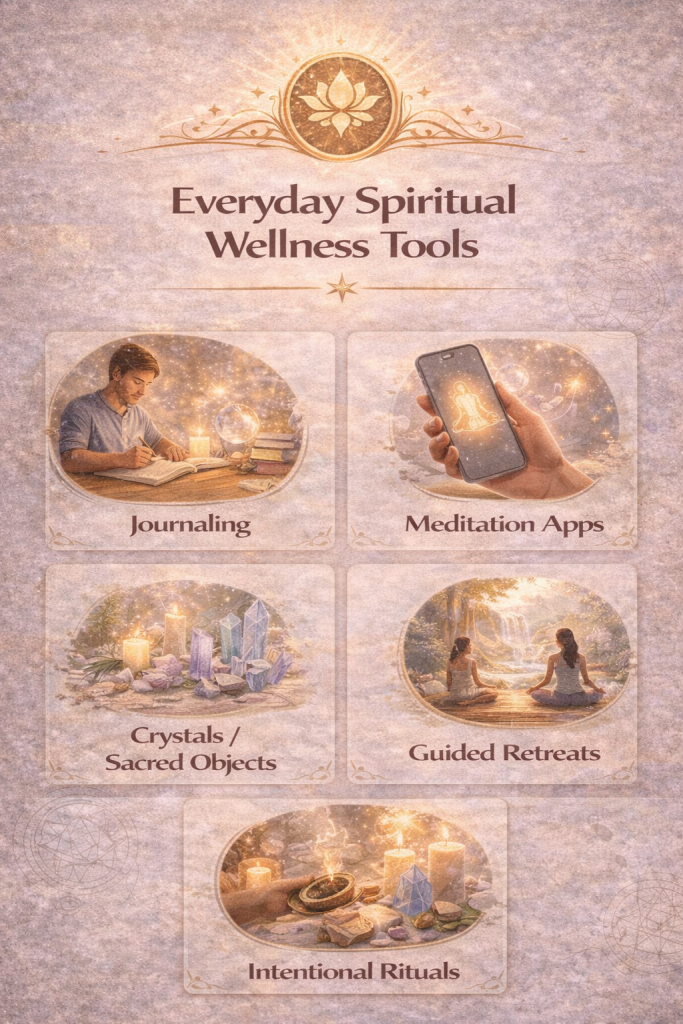
Looking ahead, spiritual wellness in America is on track to become even more integrated and everyday life. Instead of separating mental health from spiritual support, people are bringing them together. Practices that were once seen as “alternative” are now becoming tools for emotional intelligence and self-trust.
Here’s what the next decade may bring:
- Psychology and spirituality are blending more in therapy.
- More scientific studies on intuition and consciousness.
- Workplaces using grounding and mindfulness to reduce burnout.
- Growing acceptance of intuitive insight as a decision tool.
- Digital spiritual communities are continuing to expand.
As emotional awareness grows, intuition will likely become a mainstream topic of research. Psychologists are now describing intuition as a form of rapid subconscious pattern recognition, which is a definition that psychics have used for generations.
Spiritual wellness is also becoming part of ordinary routines. People ground before opening emails, breathe before challenging conversations, journal before bed, and listen to inner nudges when making decisions. Spirituality isn’t something Americans “do” once a week anymore. It’s something they live with one grounded moment at a time.
Final Thoughts: Reinventing a Meaning
The pandemic didn’t make people hide from finding meaning, but it caused them to reinvent it. Spiritual wellness in the United States blends emotional literacy, psychological insight, grounding techniques, rituals, intuition, and personal freedom. It’s flexible, modern, inclusive, and full of humanity.
People didn’t just go back to life as it was, but they returned to life with more intuition, new values, and a desire for spiritual practices. They turned to a place that supported emotional truth, resilience, and connection.
Spirituality isn’t just about belief, but it’s about staying grounded, connected, and whole.
Americans didn’t return to life as it was.
They returned with new values, clearer intuition, and a desire for spiritual practices that support resilience, connection, and emotional truth.
‘Grounding before meetings?’ What’s next, yoga breaks during board presentations? Look, if this helps people feel better, then I’m all for it, but let’s keep some professionalism intact in workplaces too!
I find it hard to believe that a sudden interest in spirituality is truly beneficial for everyone. Is relying on intuition really a replacement for professional guidance? It’s crucial that we don’t romanticize spiritual practices without addressing potential downsides.
‘Burning incense after work as a survival tactic’? Wow, who knew adulting could be so dramatic! Just give me my coffee and call it self-care; I’m not trying to summon any spirits here! ☕️👻
‘Spirituality as a survival tool’—what will they think of next? If only my houseplants could meditate away their problems too! Maybe I should start pulling tarot cards before deciding what to have for lunch! 😂
This piece offers valuable insights into the intersection of spirituality and mental health during the pandemic. The rise in mindfulness practices is well-documented, and it’s fascinating how technology has made these resources more accessible to everyone.
This article beautifully captures how the pandemic has transformed our understanding of spirituality. It’s refreshing to see a shift towards personal wellness and emotional intelligence being prioritized. I believe this is a positive evolution for society! 🌟
While I appreciate the sentiment behind this article, it seems overly optimistic about spirituality’s rise. Many people still rely on science for answers, and mixing intuition with mental health could be problematic. Let’s not ignore the importance of evidence-based practices.
‘Personalized spirituality’? Sounds like a fancy way to say people are just winging it now! Whatever happened to structured beliefs? Now we’re just mixing everything together like a spiritual smoothie! 🍹