

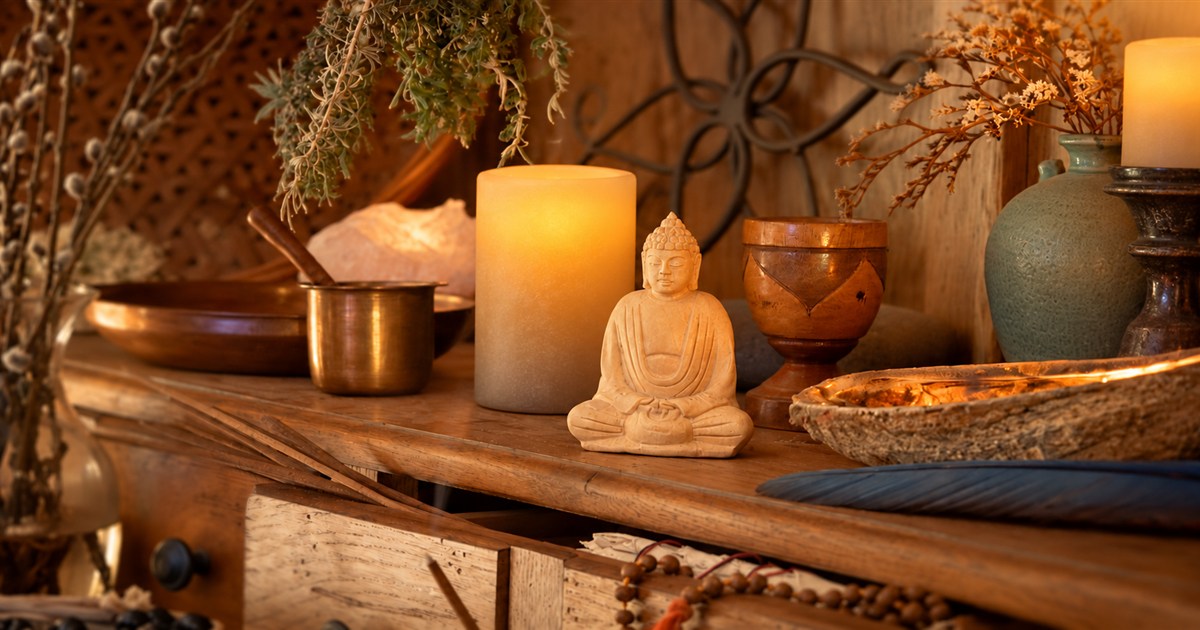
A spiritual home does not need to look like anyone else’s. It may hold a prayer corner, a family photograph, a well-used journal or simply a place where you can pause and feel connected. The meaning comes from your relationship with the space, not the number of spiritual objects on display.
Begin with a question: “What would help me return to what matters when I come home?” The answer can guide one small change rather than a complete redesign.
Make room for a pause
Choose somewhere you can sit or stand comfortably for a few quiet moments. A chair beside a window, a small shelf or a movable tray may be enough. Make it accessible to your body and your routine.
You do not need an empty room. In a busy household, a corner that returns to ordinary use afterward may work better than a permanent altar. Privacy can be as meaningful as display.
Choose objects with a reason to be there
A meaningful object might connect you with your faith, a loved one, nature or an intention. Ask what it brings to mind and whether you actually want to see it each day.
If you use sacred images, handle them according to the tradition they come from. Avoid adding a deity or religious symbol simply because a decorating guide labels it spiritual. You can keep the space simple and use objects that belong to your own practice.
Give yourself permission to put something away. An inherited object can remain important without staying permanently in the room, and you do not have to keep gifts that make you uncomfortable.
Let comfort support the practice
Consider the light, a supportive seat and a clear route through the room. Adjust an uncomfortable glare, make room for mobility needs or find a place to put the journal you keep looking for. These changes can make the practice easier to return to.
Soft candle-shaped lights can offer a focal point without an open flame. A silent pause is just as valid if you prefer no sound, scent or extra decoration. Spiritual connection does not require sensory intensity.
Build a ritual into an ordinary moment
Choose a practice short enough for an ordinary day. Before your morning drink, you might offer gratitude. When you put your keys down, you might name what you are ready to set aside. Before sleep, you could write one thing you want to carry forward.
Missing a day is not a failure or a sign that the connection has gone. You can begin again without making up repetitions or purchasing a new object. The guide to spiritual practice offers more ways to find a rhythm that fits.
Shared space needs shared consent
Ask before moving possessions, adding scent, playing ritual music or changing a room used by others. A household can be caring without everyone believing the same things.
Talk about practical needs, too: a quiet time, a place to work, a clear dining table or a boundary around visitors. An altar cannot resolve an argument on its own. How people listen and repair harm is part of the atmosphere you live in.
Care for the home without fear
A room may benefit from cleaning, repairs or a different arrangement. That does not mean it is spiritually contaminated. Secondhand furniture can be welcomed if it is suitable, clean and safe; there is no obligation to buy everything new.
If you suspect carbon monoxide, leave for fresh air and call emergency services from outside. Do not stay for a ritual or a maintenance check. See the CPSC’s guidance. Ordinary hazards need practical action even when spiritual comfort also matters to you.
For a deliberate fresh start, use the smoke-free home reset. If you enjoy a small creative project, a fairy garden can give your attention somewhere gentle to land.
Let the home support your life as it is, with room for change. It need not become a performance of spirituality to hold something sacred for you.
I don’t believe in this kind of stuff. A clean home is nice, but I highly doubt that burning incense or using crystals will make any difference.
Being kind, caring, and humble is always important, regardless of spiritual beliefs. It’s just good human behavior.
I appreciate the practical tips in this article. Cleaning, listening to music, and being creative are all things that can positively impact our environment and mindset.
Agreed, incorporating creativity and joy into our lives can definitely bring about a more positive atmosphere in the home.
The idea of using rose water for sanitizing is intriguing. I’ll have to give that a try!
This is all a bit too woo-woo for me. I’ll stick with just keeping my house clean and organized.
I’m not sure about the spiritual aspect, but listening to peaceful podcasts and enjoying calming music is definitely a great way to relax at home.
I love decorating with flowers! It really brightens up the home and brings a sense of peace and joy.
Great article! I’ve been looking for ways to make my home more peaceful and spiritual, and these tips are really helpful.