


A gap or faded area in an aura portrait is a visible feature of the image. Look at where it starts and ends, then ask how the colors were made. If a reader gives it a spiritual meaning, ask how they got there. You can use an image to reflect on what needs attention without accepting a claim that part of you is damaged.
What exactly is missing?
Describe the first thing you can point to: “The purple band fades into the grey background near my left shoulder.” Check whether the photo is cropped and whether the pale patch lines up with a bright window, pale clothing or a background boundary. Ask whether the image you received is the original or an exported version.
A smooth fade can be a gradient created by software. A sudden edge may come from a mask, crop or filter. If an aura portrait used a sensor and software, ask what the sensor measures and how those values were mapped to color. An output label alone does not show how a spiritual claim was established.
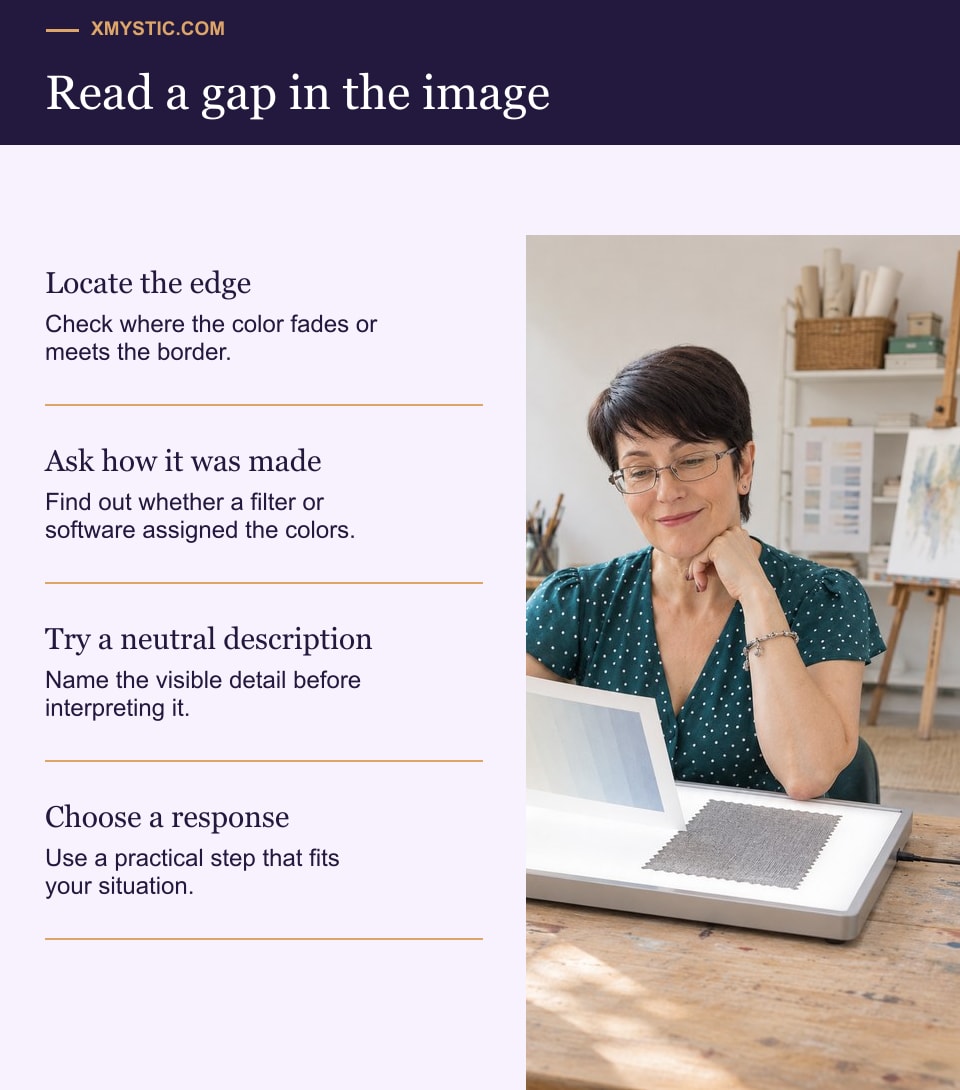
Read the visual guide as text
- Locate the edge. Check where the color fades or meets the border.
- Ask how it was made. Find out whether a filter or software assigned the colors.
- Try a neutral description. Name the visible detail before interpreting it.
- Choose a response. Use a practical step that fits your situation.
Use the same picture in two ways
Imagine a reader points to a gap near your shoulder and calls it depleted energy. In the original, the pale area merges into a white wall. In a brighter print, the gap looks larger. That makes the display or print worth checking. Ask whether the reader’s interpretation would change if the pale area came from the export.
You might still take the image as a question about where you need a break. Try naming one practical strain, such as taking calls through lunch. Ask for a protected lunch hour twice that week, then see how your afternoons feel.

Try leaving the gap open
Make a copy of the artwork. Fill in one version with color and leave the second version as it is. Describe what each brings to mind: relief, room, tiredness or simply a difference in contrast. The exercise helps you notice associations and choose your own words.
When a session leaves you worried, you can ask for a plain explanation before booking anything further. If an actual symptom is bothering you, a qualified clinician can help assess it. For optional spiritual reflection, explore the smoke-free grounding practices in our aura guide.
Frequently asked questions
1. Does an aura gap mean something is wrong with me?
A gap is a description of an image or a reader’s impression. It cannot establish a health problem, personal defect or spiritual damage.
2. Why might an aura color look washed out?
Lighting, the background, a gradient, a filter or differences between the original and a displayed copy can change how pale a color looks.
3. What can I ask the person who made the portrait?
Ask how the colors were generated and which part comes from the device, the software and the reader’s interpretation.
4. Can I ignore a reading that upset me?
Yes. You can leave its interpretation open, decline another session and focus on a practical concern you can describe directly.
5. What can I write about a faded area?
Note the visible area first, then any association and one everyday action you can try.